Interview guide
50 Music Artist Interview Questions That Get Past the Press Line
A practical set of questions for hosts, writers, podcasters, and artists who want conversations that reveal the work behind the release.
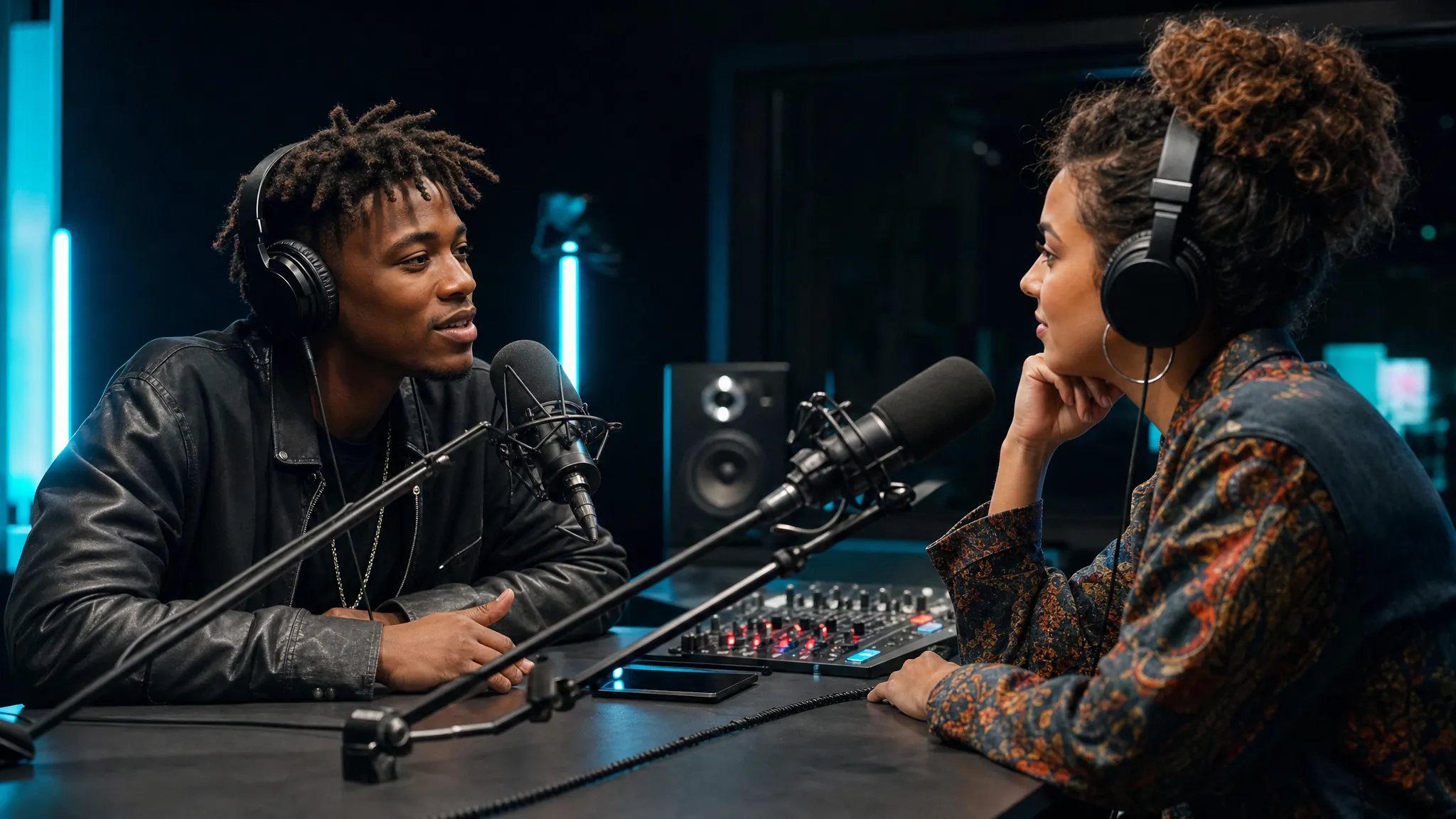
The strongest music artist interview questions do more than fill time between songs. They help an artist explain the choices, pressure, people, and moments behind the work. That is what turns a release plug into a conversation listeners remember after the microphones go quiet.
Use this list as a question map, not a script. Choose the prompts that match the artist and the moment, then listen closely enough to change course when an answer opens a better story. Whether you host radio, make a podcast, write a feature, or are preparing for a short live segment, the goal is the same: make room for the artist to say something real about the music.
Prepare for the artist, not just the announcement
Before the interview, listen to the newest release all the way through. Read the credits, watch one recent performance, and make a few notes about details that caught your attention. A lyric, a production turn, a title, a feature, or a shift from earlier work gives you an honest starting point. It also shows the artist you did not arrive with the same questions you could ask anyone.
Build a short plan with three lanes: where the artist is coming from, what they made, and where they are going next. That structure keeps a conversation moving without making it sound rehearsed. For a quick segment, one thoughtful question in each lane is often enough. For a longer conversation, let the artist's answers decide how much time each lane deserves.

Questions about the artist's beginning
Origin questions work when they invite a memory instead of a résumé. Ask for a scene, a turning point, or the first time the work felt personal. Those answers help new listeners understand what the artist carries into the current music.
- What first made music feel like more than a hobby for you?
- What did your earliest setup look and sound like?
- Who believed in your music before it was easy to believe in?
- What part of your hometown still lives in your work?
- What was the first song that felt fully honest?
- Which early influence taught you something you still use today?
- What did you have to unlearn before your own voice showed up?
- Was there a particular performance that changed how seriously you took the work?
- What is one early creative risk you are still glad you took?
- What would the younger version of you be surprised to see now?
Questions about the new music
A new single, EP, album, video, or collaboration is usually the reason for the interview. Go beyond asking the artist to describe it. Ask about a decision inside the work, then give them room to explain what a listener may not catch on the first play.
- What was the first spark behind this release?
- Which song told you the project had a real direction?
- What did you protect most while making it?
- Which lyric took the longest to get right?
- What changed most between the first demo and the final version?
- What sound or detail might listeners miss the first time through?
- Which track feels closest to where you are right now?
- Was there a moment you almost cut but decided to keep?
- What conversation do you hope this release starts?
- What should someone listen for when they press play again?
A useful follow-up often begins with a small detail the artist just gave you. If they mention a difficult session, ask what made the room difficult. If they say a song came quickly, ask what arrived first. If they describe a choice as personal, ask what helped them trust it. Those questions move the conversation from a polished summary into the lived process behind it.

Questions about the creative process
Creative-process questions give an artist a chance to talk craft without forcing them into technical jargon. Stay specific, but keep the language open enough for a writer, producer, singer, rapper, DJ, or instrumentalist to answer in their own way.
- How do you know when a song is finished?
- Where do your strongest ideas usually arrive?
- What is your first move when a song is not working?
- How do you decide what belongs on a project and what stays unfinished?
- What part of the process asks the most patience from you?
- What did a collaborator bring out that you could not reach alone?
- How has your writing or recording process changed recently?
- Do you start with words, melody, rhythm, a sample, or something else?
- What is a creative rule you have learned to ignore?
- Which decision on this project taught you the most?
When an artist gives you a technical answer, ask them to bring it back to a moment a listener can picture. A producer may explain that a drum pattern had to change, but the better story may be the first time the new rhythm made everyone in the room look up. A singer may talk about changing a key, but the useful follow-up is what the earlier version could not express. You are not asking them to simplify the work. You are asking them to show how the decision felt while it was being made.
It also helps to distinguish between a question that earns a short fact and one that earns a story. “Who produced this?” has a place when listeners need the credit. “What did that producer hear in the song that you had not heard yet?” gives the artist somewhere more interesting to go. Keep both kinds of questions in your notes, but reach for the story question when the conversation has room to breathe.
Questions about identity, culture, and community
Music comes from a real life, but a good interviewer does not need to force intimacy. Invite the artist to connect the work to their community, values, and influences, then let them decide how far to go. The Society of Professional Journalists' guidance on minimizing harm is a useful standard: be direct when a question matters, avoid rumor, and never treat a guest's private life like a shortcut to drama.
- What does your local music community give you that nowhere else can?
- Who is making work right now that has your attention?
- What part of the culture do you feel most responsible for protecting?
- What do people often misunderstand about where you come from?
- What does independence mean to you at this stage?
- What kind of space do you want your music to make for listeners?
- How has your audience changed the way you think about your work?
- What does success look like to you right now?
- What are you more protective of than you were a year ago?
- What do you want people to hear beyond the obvious sound?
Questions that work on live radio
Live radio leaves little room for a long setup. Keep questions clear on first hearing, name the project or artist when a new listener needs context, and avoid squeezing two separate questions into one. A good live question gives the artist room to paint a picture while still making sense to someone joining the broadcast mid-conversation.
- If someone hears you for the first time today, where should they start?
- What was the exact moment you knew this release had to come out?
- Which song changes the most when you perform it live?
- What is one line or sound from the project that still hits you every time?
- What would surprise listeners about how this music came together?
- What did this project ask you to be more honest about?
- What has the response to the music taught you so far?
- What do you want a listener to carry with them after this conversation?
- What is the next room, stage, or idea you are building toward?
- Where should people go after they hear the music today?
On a short show, open with the current release, ask one question about the process, and finish with a listener-facing next step. You can hear versions of that rhythm in the Live Wirez interview archive, where music and culture figures have room to tell the story behind the moment rather than rush through a checklist.
Time the close with care. If the artist is there to introduce a new song, do not leave the title, release date, or next show until the final second. Get the essential listener information early enough that a strong answer cannot push it off the clock. Then return to the detail that had the most feeling, so the guest leaves the segment sounding like a person with a point of view rather than a guest reading a flyer.
Let the follow-up do its job
A prepared prompt gets the conversation moving. The follow-up is what proves you are listening. When an answer carries energy, slow down. Ask what happened next, who was there, what changed, or how the artist knew they had found the right direction. Poynter's guide to interviewing basics makes the same point in plain terms: open questions and patient listening give a guest room to develop the answer.
Do not confuse a follow-up with an ambush. A thoughtful “Can you take me back to that session?” or “What did that change for you?” helps an artist add texture. It is especially useful when you are talking to someone who has already answered the standard questions many times. The best answer may be sitting inside one small detail they did not expect anyone to notice.
Some subjects need a clearer agreement before you take them on air. A dispute, health issue, family situation, legal matter, or public rumor may be part of the larger story, but that does not make it the most useful question. Ask whether the topic belongs to the work at hand, whether you can frame it accurately, and whether you are ready to accept a brief answer or no answer at all. A conversation can be honest without turning a guest into a headline.

Make room for artists to be heard
Live Wirez is built around music, conversation, and independent voices. Hosts and writers can use these questions to find more depth in an artist's story, while listeners can hear the station live and explore more real conversations in the archive. An artist with a new release, a performance, or a story worth sharing can review artist opportunities, look at radio promotion services, or learn how hip-hop music promotion can support a release that needs a wider audience.
Keep the interview focused on the music, make the guest feel prepared rather than trapped, and close with somewhere useful for listeners to go. That is enough structure for a strong conversation, and enough space for an artist to take it somewhere neither of you planned.
Frequently asked questions
What are good questions to ask a music artist?
Good music artist interview questions invite a story about a specific choice, moment, lyric, collaboration, or performance. Start with the current release, then ask follow-up questions that help the artist explain how the work came together and why it matters to them.
How do you make an artist interview less promotional?
Prepare a few observations about the music before the conversation, then ask about the work instead of repeating the press release. Questions about decisions, doubts, turning points, and the artist's relationship with listeners make space for an answer that has more substance than a release announcement.
How many questions should I prepare for a music artist interview?
For a 20-minute interview, bring 10 to 15 prepared prompts, but expect to use fewer. A flexible outline leaves room for follow-ups, which are often where the most memorable answers arrive.
Should I send interview questions to a music artist in advance?
A short topic outline can help an artist prepare for a live or time-limited appearance. Keep the outline broad and save a few specific follow-ups for the conversation, so the interview can still respond naturally to what the artist shares.
Related posts
Interview guide
40 Music Interview Questions That Get Artists Talking
A practical question bank for hosts, writers, podcasters, and artists who want conversations with more than surface-level answers.
Read the guide →
Interview guide
45 Rapper Interview Questions That Go Beyond the Basics
A sharper set of prompts for conversations about bars, beats, community, craft, and the work behind the release.
Read the guide →
Interview guide
40 Band Interview Questions That Start Real Conversations
Thoughtful prompts for interviewing bands about their sound, chemistry, creative process, and the story behind the music.
Read the guide →