Interview guide
45 Rapper Interview Questions That Go Beyond the Basics
A sharper set of prompts for conversations about bars, beats, community, craft, and the work behind the release.
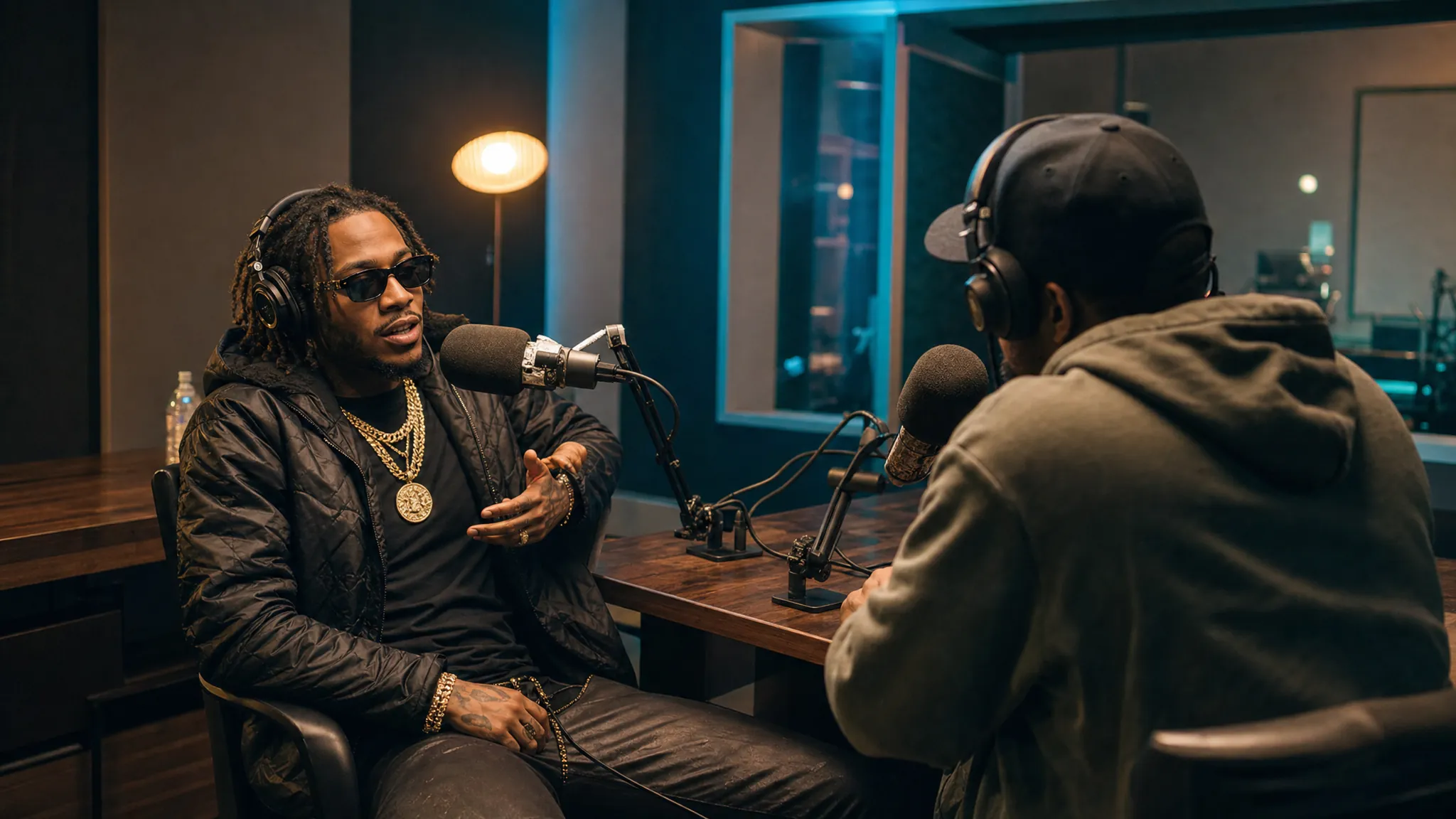
The best rapper interview questions give the artist a place to talk about the music, not just promote it. A good conversation can move from a line that took three days to write, to the producer who changed the record, to the block, city, or memory that still shows up in the work. That is where listeners hear the person behind the release.
Whether you are hosting a radio segment, filming a short video, writing a profile, or sitting down with an artist before a show, use these rapper interview questions as routes into a real conversation. Pick the prompts that fit the guest, do your homework, and listen long enough for the answer to lead somewhere unexpected.
Why rapper interviews need better questions
Rap is often covered through headlines, numbers, conflict, and quick takes. Those subjects can matter, but they are rarely the whole story. A rapper may be building a sound with a producer, carrying a local scene into a bigger room, figuring out how to perform a vulnerable record, or learning what it means to lead a team. Ask about the work underneath the headline and you give both the artist and the listener something more useful.
The difference is specificity. “Who inspired you?” can work, but “What did you borrow from the way that record leaves space between the drums and your voice?” proves you paid attention. The best questions are open enough for a story, precise enough to avoid a generic answer, and short enough to sound natural out loud.
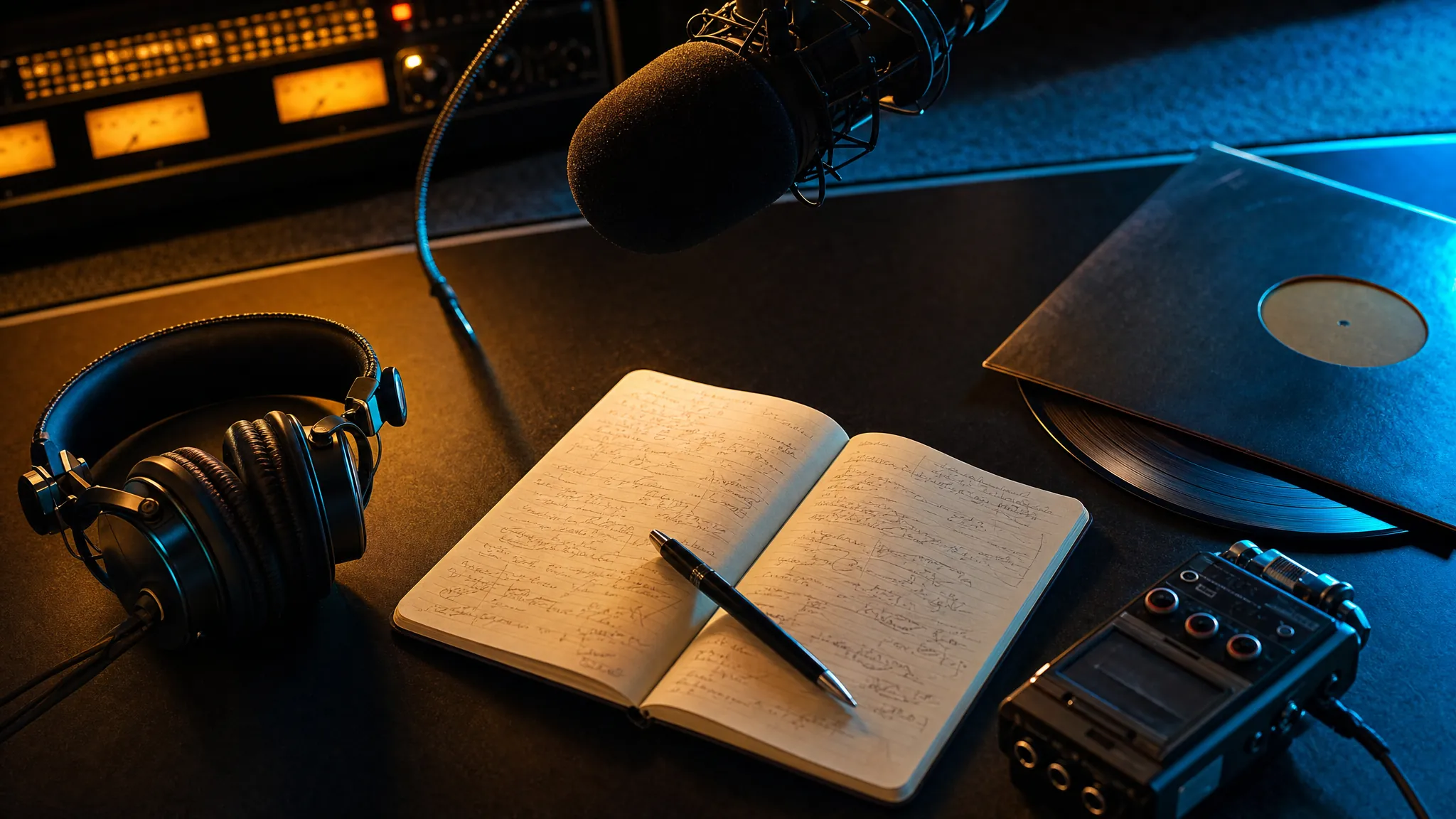
Build a short artist brief before you press record
Preparation is not about walking in with a speech. It is about finding a few real entry points. Listen to the artist's newest project in order. Read the credits. Watch one recent performance or interview. Then write down three things that caught your attention: a bar, a production choice, a title, a collaboration, a visual, or a shift from older work.
Bring a simple question map instead of a stack of paragraphs. Start with one easy opener, keep a few questions about the release, save room for the person behind the music, and close with a clear place for listeners to go next. The question list below is built for that kind of map. You will not need every prompt, and that is the point.
For the clearest answers, keep one question in the air at a time. Avoid stacking “How did you make this record, who produced it, and what do you want fans to take from it?” into one breath. Let the artist answer one thought fully, then use the answer to choose the next door.
Rapper interview questions about the beginning
These openers get past a surface biography and give a new listener a way into the artist's point of view.
- What made you take rap seriously for the first time?
- What did your earliest recording setup look like?
- What part of your city or neighborhood still shows up in your music?
- Who heard your potential before you fully believed in it?
- What is the first verse you wrote that felt like your own voice?
- What did you have to unlearn as you got better at writing?
- Which local artist or DJ gave you an early lesson without trying to teach one?
- What did the people around you misunderstand about your path at first?
- What early record still explains something about the artist you are now?
- When did you stop copying your influences and start trusting your instincts?
Questions about bars, beats, and the studio
Craft questions are where an artist can show listeners how the record came together. They work best when you can point to a particular track, verse, beat switch, hook, or credit.
- Which bar on this project took the longest to get right?
- What did you want the first line of the record to tell people?
- How do you know when a verse is finished instead of just familiar?
- What did the beat make possible that a different production would not have?
- Which song changed the most between the first demo and the final version?
- How do you decide whether a line should be direct, layered, or left unsaid?
- What sound on this project might listeners miss on the first play?
- What did a producer pull out of you that you could not reach alone?
- Was there a line you loved that did not make the final version?
- What did you protect most while making this release?
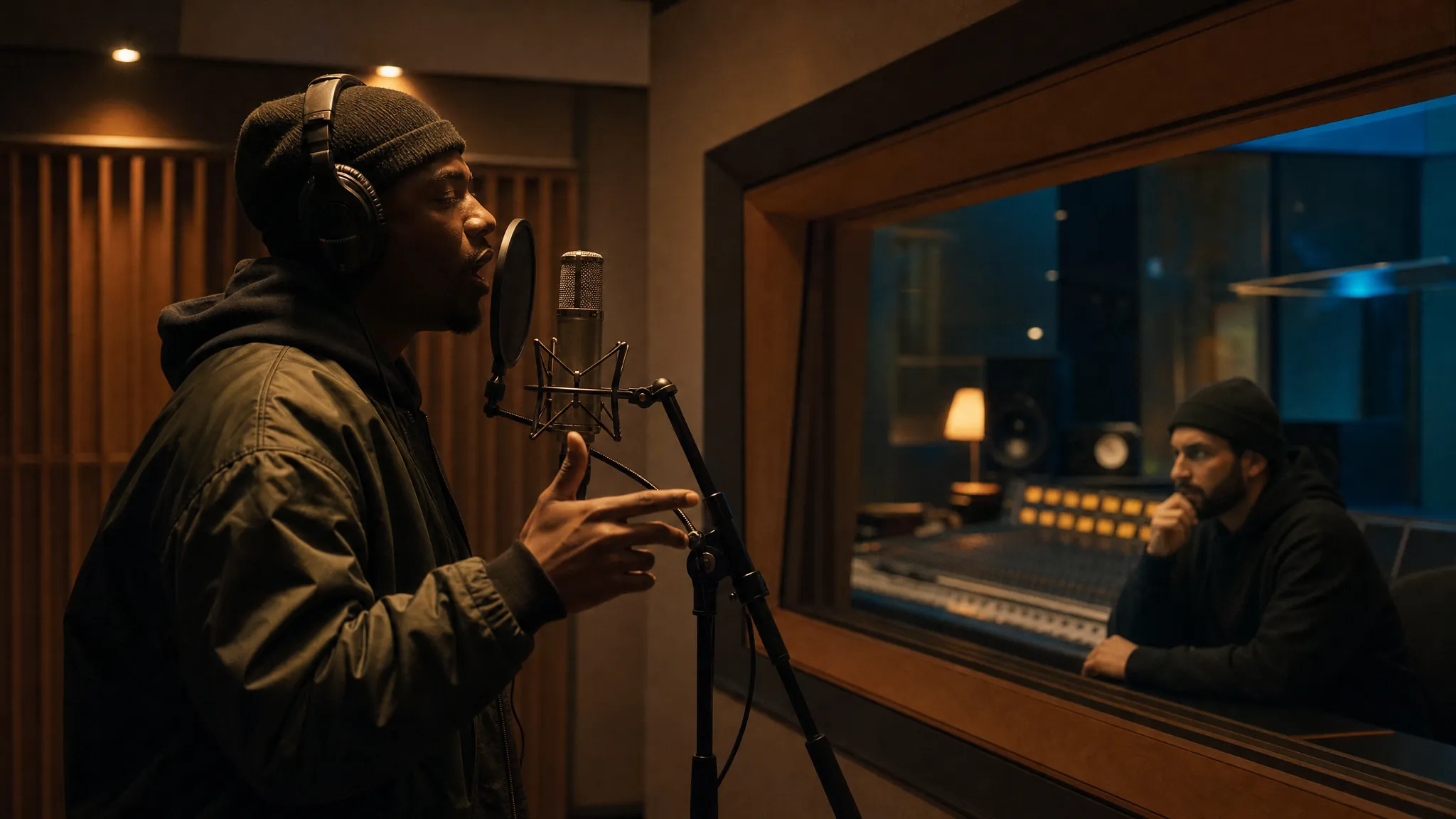
Questions that open up the release
A new song or project is often the reason for the interview. Treat it like a starting point, not a commercial. Good release questions help the artist explain the choices that give the music its weight.
- What does this project say that your last one could not?
- Where were you emotionally when you started making it?
- Which track carries the most personal risk for you?
- What conversation do you hope the project starts?
- What track would you play first for someone who has never heard you?
- What made this the right moment to release these songs?
- Which collaborator changed the direction of the project?
- What did you learn about your audience while making this record?
- What did you leave out because it did not belong in this chapter?
- When the last track ends, what do you hope stays with the listener?
Questions about community, stage presence, and what comes next
Rap lives in rooms, scenes, and relationships as much as it lives in headphones. These questions can connect the release to the culture around it without forcing the artist into a slogan.
- What is happening in your local scene that more people need to hear?
- Who is doing important work around you that deserves more attention?
- What does a great live set need from you?
- Which song changed once you started performing it for people?
- How do you want a first-time listener to feel when they leave a show?
- What does independence mean to you at this point in your career?
- What part of building a career has been more demanding than you expected?
- Who keeps you honest when the work gets bigger?
- What are you more protective of now than you were a year ago?
- What are you building toward after this release?
Make the question sound like a conversation
Even a strong idea can fall flat when it sounds like it was pulled from a form. Read your questions out loud before the interview. If a sentence needs a long setup, strip it back. “What did you learn from making this project?” is easier to hear than a question packed with every detail you researched.
Use the artist's own language when it helps, but do not perform familiarity. You can mention a track title, a producer, a city, or a bar that caught your ear without adopting slang that does not belong to you. Respect comes through in preparation, accuracy, and attention, not in trying to sound like the guest.
Choose questions that leave room for a story. “Was the album hard to make?” invites a yes or no. “What was the hardest decision you had to make while finishing this album?” asks for a moment, a choice, and a consequence. That small shift gives the artist more to work with and gives listeners a better answer.
Be ready to trade a prepared question for a better one. If the artist says the hook came from a voice note, ask what was happening when they recorded it. If they mention a producer sending a different beat at the last minute, ask how that changed the song. Interviews feel alive when the next question belongs to the answer you just heard.
Use follow-ups to find the story
Prepared rapper interview questions get the first answer. Follow-ups are what turn an answer into a scene listeners can remember. When the artist says a track came from a hard night, a long drive, a studio argument, or a moment with family, slow down. Ask what happened. Ask who was in the room. Ask what changed after that.
Poynter's guide to interviewing basics is useful here: open-ended questions and patience give a guest room to develop an answer. You do not need to fill every pause. Sometimes the strongest next question is simply, “Can you take me back to that moment?”
Listen for details the artist offers without being asked. A specific producer, a hometown venue, an unfinished song, or a phrase they repeat can all become better follow-ups than the next item on your page. That attention is how an interview stops sounding interchangeable.
Questions to handle with care
Not every interesting subject needs to be forced into an interview. Legal matters, grief, family, health, conflict, and public controversy deserve context and a reason for being raised. Do not build a conversation around rumors, do not ask a guest to speak for an entire community, and do not turn a difficult moment into a gotcha question.
The Society of Professional Journalists' Code of Ethics is a practical reminder to seek truth while minimizing harm. You can ask a direct question without making the artist feel cornered. State the subject plainly, give them room to answer in their own language, and be ready to move on if it is not a conversation they want to have.
A simple running order for a live rap interview
For a short live segment, start with a warm question about the new music. Move to one detailed craft question, one question about the artist's world, and one closing question that sends listeners to the right place. Give the guest a clear sense of timing before the microphones go hot, especially if there is a music break or a hard out.
For a five-minute conversation, an easy shape is: one opener, one release question, one craft follow-up, and one closing invitation to listeners. Do not burn half the segment on introductions. Name the artist, name the release, then get to the point that makes the moment distinct.
For a longer conversation, let the talk breathe. Start with the beginning, spend real time on the record, then widen the frame to performance, community, and the next chapter. The Live Wirez interview archive is built around that kind of conversation, with artists and culture figures given room to tell a story beyond a quick release plug.
Keep the conversation connected to the music
A strong interview should bring people back to the work. Close by naming the release, the upcoming show, or the platform the artist wants listeners to visit. Then keep the station in the mix. Listeners can tune into Live Wirez Radio Show for music in rotation, and artists looking for a wider conversation can explore artist opportunities, read about radio promotion services, or contact Live Wirez directly.
The goal is not to ask every question on a list. It is to make the artist feel heard, give listeners an honest reason to stay, and leave enough room for a story neither side planned.
Frequently asked questions
What makes a good rapper interview question?
A good rapper interview question is specific, open-ended, and rooted in the work. It gives the artist room to explain a lyric, beat, decision, or experience instead of forcing a short promotional answer.
How do you prepare for a rapper interview?
Listen to the latest release from beginning to end, read the track list and credits, note a few bars or production choices that stand out, and learn enough about the artist's recent moves to ask a focused first question.
Should I ask about rap beef in an interview?
Only raise conflict when it is central to the artist's work and you can ask with care, context, and a clear reason. Do not turn an interview into a rumor recap or pressure a guest to revisit something they do not want to discuss.
How many questions do I need for a 20-minute rapper interview?
Bring 10 to 15 prepared prompts, but expect to use fewer. The strongest interviews follow useful answers, so keep a few questions in reserve and leave room for the guest to take the conversation somewhere real.
Related posts
Interview guide
40 Music Interview Questions That Get Artists Talking
A practical question bank for hosts, writers, podcasters, and artists who want conversations with more than surface-level answers.
Read the guide →