Interview guide
48 Music Interview Questions to Ask Artists
Use these 48 music interview questions to prepare thoughtful conversations with singers, rappers, bands, and independent artists.
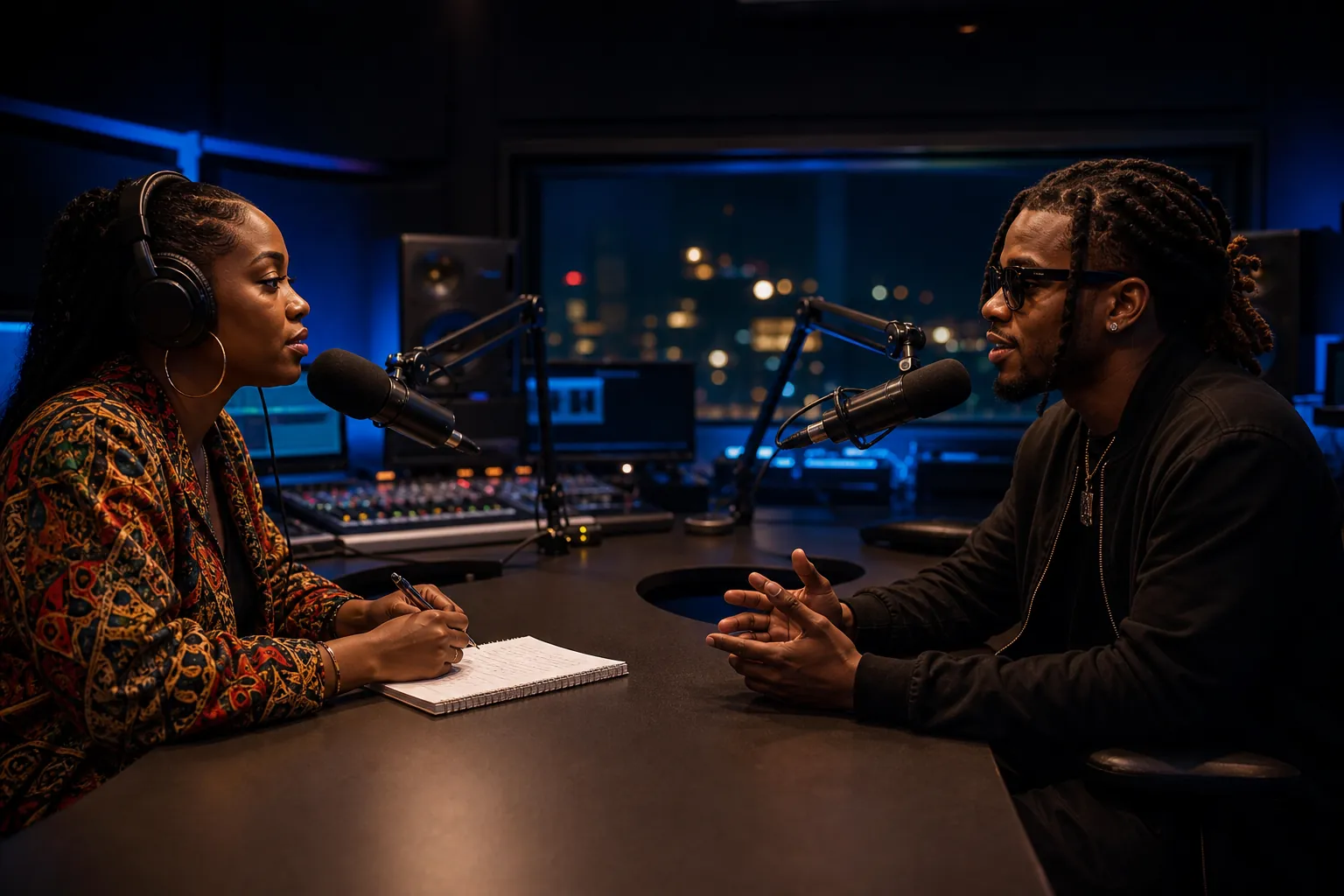
The best music interviews do not feel like a checklist. They sound like two people finding the story behind the release, the craft, and the life that shaped it. Whether you host a radio show, run a podcast, write about music, or are getting ready for an artist conversation, a well-built question list gives you enough structure to relax and listen.
Use these music interview questions as starting points, not a script. Pick the prompts that fit the artist, the moment, and the audience. Leave space for the answer that changes the direction of the conversation.
Start with a question map, not a rigid script
Before the interview, listen closely to the latest release and read the artist's recent work. Pull out three details that genuinely interest you: a lyric, a sound choice, a collaboration, a hometown reference, or a change from earlier music. Those details become your anchors when the talk needs more depth.
Build your list in three lanes: the person, the process, and the present moment. That gives the conversation a natural arc without forcing it into a biography. Keep a short opener ready, but do not be afraid to skip ahead when an answer gives you a better route.
Questions about the artist's beginning
Early questions should invite a real memory, not a rehearsed press line. They help a new listener understand what the artist carries into the music.
- What first made music feel like your lane?
- Who heard your sound before anyone else did?
- What did your early music setup look like?
- What part of your hometown still shows up in your work?
- What was the first song you made that felt honest?
- Which artist taught you something without ever meeting you?
- What did you have to unlearn as you found your voice?
- What is one early record you still stand behind?
Questions about the creative process
These prompts get past the usual “who inspires you?” answer. Ask for a decision, a moment in the room, or a shift in the work. Specific questions give an artist something concrete to return to.
- Where did the first spark for this project come from?
- What was the first track that told you the project had a direction?
- How do you know when a song is finished?
- What did you protect most while making this release?
- Which lyric took the longest to get right?
- What sound on the record might listeners miss on the first play?
- How do you decide what belongs on a project and what stays in the vault?
- What did a collaborator bring out of you that you could not reach alone?
Questions that open up the new music
A release is the reason for the interview, but it should not become a sales pitch. Ask about the work in a way that lets the artist explain what listeners are hearing and why it matters to them.
- What does this song say that you could not say another way?
- Where were you emotionally when you wrote it?
- What changed between the first demo and the final version?
- Which moment on the project feels most personal?
- What conversation do you hope this release starts?
- What should a listener sit with after the song ends?
- Which track would you play first for someone new to your catalog?
- What did taking a creative risk teach you on this project?
Questions that bring out the person behind the music
This is where a conversation can become memorable. Stay curious, keep the question clean, and do not make a guest defend a feeling they did not offer. The Society of Professional Journalists' guidance on minimizing harm is a useful reminder that a strong interview can be direct without becoming careless.
- What part of yourself are you learning to trust more?
- What does success look like to you right now?
- What keeps you grounded when the attention gets loud?
- What is a misunderstanding you have stopped trying to correct?
- What are you more protective of than you were a year ago?
- Who makes your work better by telling you the truth?
- What part of the journey deserves more credit than it gets?
- What are you still curious enough to be a student of?
Questions about culture, community, and what comes next
The final stretch should leave listeners with a clear sense of motion. It can connect the artist to their community, their audience, and the next chapter without rushing into a generic “what's next?”
- What is happening in your local scene that more people should hear about?
- Who is making work right now that has your attention?
- What kind of room do you want your music to create for people?
- What does independent mean to you at this stage?
- What is one thing you want fans to understand about your process?
- What has your audience taught you about your own music?
- What are you building toward after this release?
- Where should people go after they hear this conversation?
Prepare the room before the interview starts
Good music interviews begin before the first question. Confirm the guest's name, pronouns, project title, and any key collaborators. Ask whether there is a subject they want to frame carefully or a recent change worth knowing about. That is not about making the conversation soft. It is about avoiding an avoidable mistake that pulls attention away from the music.
Next, agree on the shape of the segment. A guest who knows they have 15 minutes, a performance break, and time to name a release can settle into the moment. A guest who is surprised by a sensitive question or a hard stop will often give you guarded answers. Preparation gives both sides more freedom when the microphones are on.
Keep your notes visible but light. A page full of paragraphs makes an interviewer stare down. Use names, song titles, a few precise details, and one or two questions you do not want to lose. That leaves your attention where it belongs: on the answer in front of you.
Questions that work especially well on live radio
Live radio moves fast, so the strongest prompts are easy to understand on first hearing and give the artist room to paint a picture. They should also make sense to someone who has never heard the artist before. Avoid questions with a long preamble, inside references that listeners cannot follow, or two separate questions packed into one sentence.
- What was the exact moment you knew this song had to come out?
- If someone hears you for the first time today, what should they listen for?
- What would surprise people about how this record came together?
- What is one line from the project that still hits you every time?
- Which song changed most when you performed it for other people?
- What conversation are you hoping to have with fans after this release?
- What have you learned about yourself since the last time you put music out?
- What is the first thing you want listeners to know before they press play?
Let the answer change your next question
Great interviewers are not trying to prove that they did the most research. They use research to recognize the answer that deserves more air. When a guest mentions a difficult studio session, a family influence, a creative disagreement, or a local scene that shaped them, slow down. Ask for the scene. Ask who was there. Ask what changed afterward.
That approach is also how you avoid the “same five questions” interview. Two artists may both be asked about influences, but their answers should lead somewhere different. One may open a door into songwriting, another into community, and another into a record that helped them survive a hard time. Follow the door that opens.
Be willing to leave a planned question behind. You can return to it if the conversation needs it, but listeners remember the story that felt discovered in the room. They do not remember the question you asked because it looked good on a page.
Use follow-ups to find the real story
A prepared question gets the conversation moving. A follow-up is what proves you are there. Poynter's interviewing guide recommends open-ended prompts and patience, two habits that matter as much in a music studio as they do in a newsroom.
When an artist gives you a quick answer, do not immediately reach for the next question. Try “What did that feel like in the room?” “What happened after that?” or “Can you take me back to that moment?” Those invitations are not traps. They give the guest a chance to add texture in their own words.
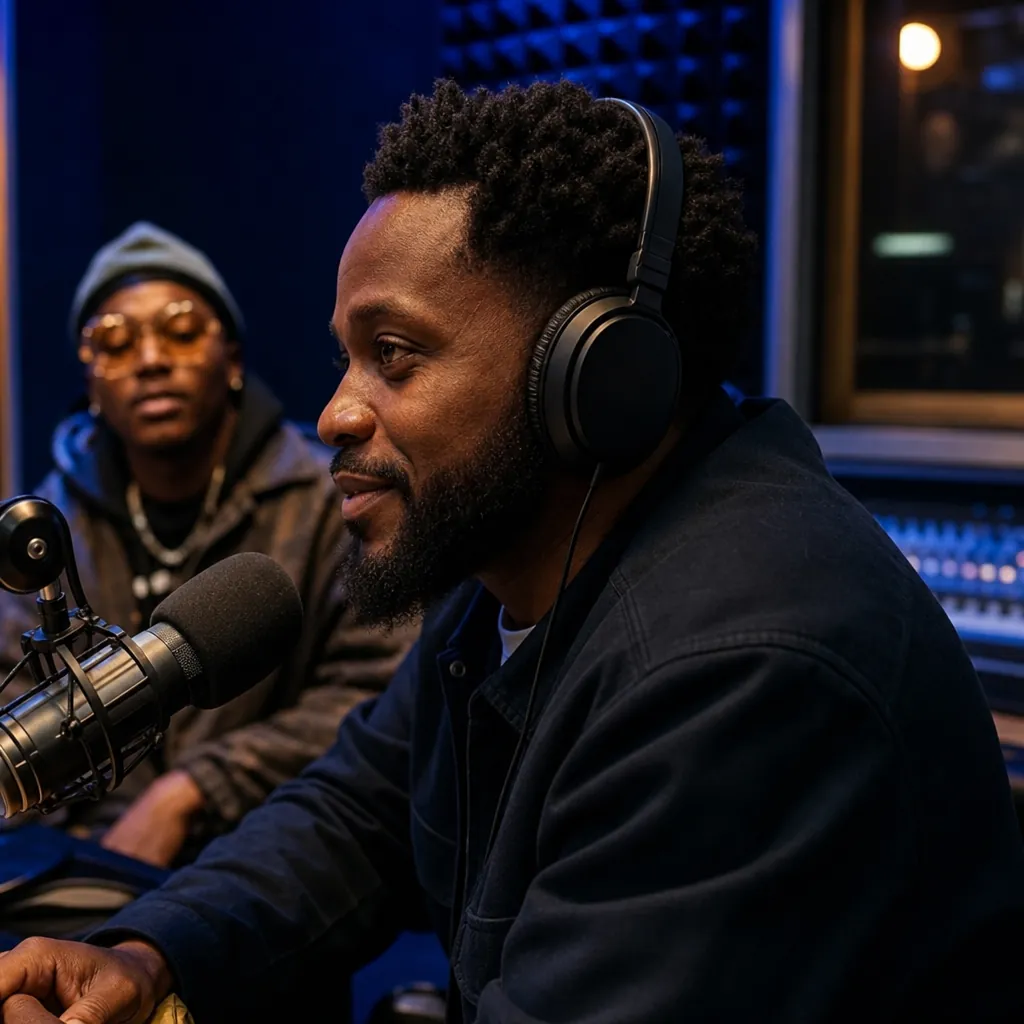
A simple running order for a live conversation
For a short radio segment, start with a warm opener, move into one clear story about the music, then give the artist a moment to speak directly to listeners. Save the most personal question for after you have built trust. If the guest is new to live interviews, tell them what the segment will feel like before the microphones go hot.
For a longer conversation, use the questions in clusters. Begin with the beginning, spend real time on the project, then widen the lens to culture and the future. You can hear how that rhythm works across the Live Wirez interview archive, where artists and culture figures have space to tell stories beyond a single release.
Give the interview somewhere to go
A great conversation should lead listeners back to the music. Close by naming the project, the next performance, or the place the artist wants people to visit. Then keep the door open. Listeners can tune into the station for more music in rotation, while artists looking for a wider conversation can explore artist opportunities or contact Live Wirez Radio Show.
The aim is simple: ask questions that make an artist feel heard, give listeners a real reason to stay, and leave enough room for the moment that neither side planned.
Frequently asked questions
How many questions should I prepare for a music interview?
Prepare more questions than you expect to use, then let the conversation decide the order. A 20-minute interview can move well with eight to 12 strong prompts, a few artist-specific notes, and room for follow-up questions.
What makes a music interview question good?
A good question is specific enough to prove you listened, open enough to invite a story, and simple enough to answer without a long setup. The best prompts leave room for the artist's own language and point of view.
Should I send music interview questions in advance?
Sending a short topic outline can help an artist feel ready, especially for a live or time-limited appearance. Keep a few unsent follow-up questions for the room so the conversation can still feel natural.
How do I avoid a boring artist interview?
Avoid a long run of biography questions and do not move on too quickly after a memorable answer. Ask about a real creative decision, a turning point, or a specific song, then listen closely enough to follow the thread.
Related posts
Interview guide
45 Rapper Interview Questions That Go Beyond the Basics
A sharper set of prompts for conversations about bars, beats, community, craft, and the work behind the release.
Read the guide →