Interview guide
40 Band Interview Questions That Start Real Conversations
Thoughtful prompts for interviewing bands about their sound, chemistry, creative process, and the story behind the music.
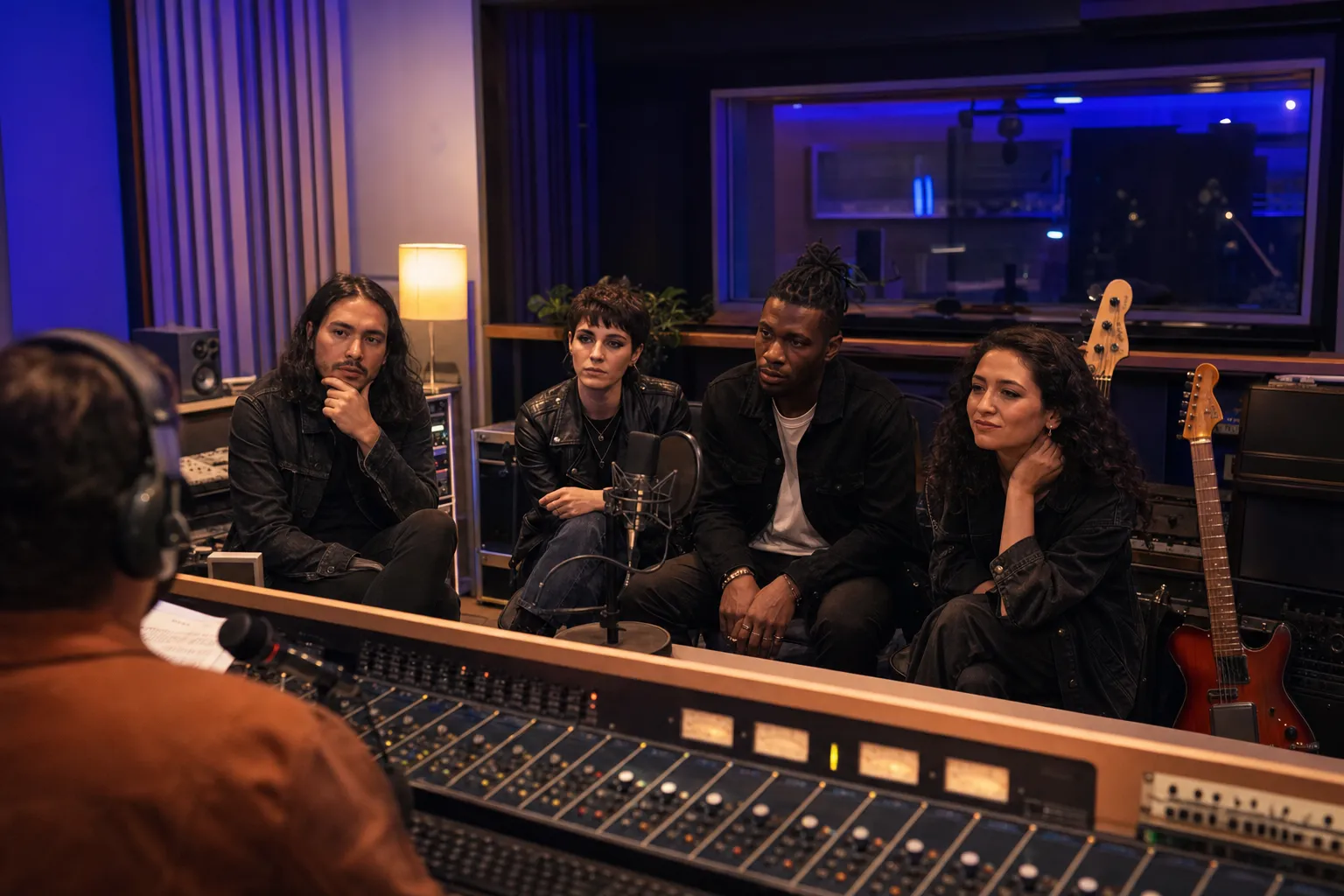
A band interview has a different rhythm from a one-on-one conversation. There are more voices in the room, more shared history, and more chances to learn how a song changed hands before it reached the listener. The best band interview questions help the group tell that story without turning the conversation into roll call.
Whether you are hosting radio, recording a podcast, writing a feature, or welcoming a group before a live set, these questions give you practical ways into the music. Use the prompts that fit the band in front of you, listen for the answer with energy behind it, and leave enough space for the next member to add their piece.
Prepare for the group, not just the release
Before an interview, learn the names and roles of every member. Listen to the newest project in order, read the credits, and look for a few details that are specific to this group: a production turn, a lyric, an arrangement, a visual, or the way one instrument carries a song. That preparation prevents the conversation from leaning on generic questions that could belong to any band.
Bring a short question map. Start with one opener the whole group can answer, then give each person a natural route into the conversation. A drummer may have the clearest view of how a song locks together. A bassist may explain the groove that gave the track its movement. The vocalist may have the story behind the lyric, but not every question needs to end with the singer.
It also helps to decide how you will share the room. If several people speak at once, let the moment happen, then pick out one thread and ask someone to finish it. A group should sound like a group, but listeners still need to hear the answer. Keep questions short, address a member by name when it makes sense, and give quieter people a real opening rather than an afterthought.

Band interview questions about the beginning
Origin questions work best when they get past a timeline. Ask for the odd first rehearsal, the song that made the group feel real, or the reason these particular people kept showing up for the work.
- What was the first moment this group felt like a real band?
- Who made the first move to bring everyone together?
- What did your earliest rehearsals actually sound like?
- What song made you realize you had your own chemistry?
- What did each member bring that the band could not find anywhere else?
- What part of your hometown or local scene still shows up in the music?
- Was there an early gig that changed how seriously you took the band?
- What did you have to let go of before the sound started to click?
Questions about the sound and the songs
Specific craft questions let a band explain the work without asking them to translate every musical detail into jargon. Point to a song, a turn in the arrangement, a lyric, or an instrument that stays with you, then ask how that choice arrived.
- Which song on the new release best explains where the band is right now?
- What was the first piece of the project that told you the sound had a direction?
- How does a rough idea move from one person to the whole group?
- Which part of the arrangement changed the most before the final version?
- What did you protect most while making this record?
- Who usually notices when a song is finished?
- What instrument or texture on this project might listeners miss the first time through?
- Which lyric, riff, rhythm, or melody took the longest to get right?
- What was the hardest creative decision the band had to make on this release?
- What does this project say that your earlier work could not?
For a useful follow-up, ask for the scene. If someone says a chorus almost got cut, ask what made the group keep it. If a guitarist says a part changed in rehearsal, ask what the room sounded like before and after. Details like that give listeners a way to hear the music again when they press play.
Questions that bring out the group chemistry
Every band has a working language. Some members build songs in real time, some trade files at midnight, and some need to argue through an idea before they trust it. These questions make that shared process visible without forcing anyone into a fixed role.
- How do you know when everyone believes in a new song?
- What does a productive disagreement sound like in this band?
- Who is most likely to push a good idea somewhere stranger?
- What has one member taught the rest of the group about making music?
- When a song stalls, how do you get it moving again?
- What is the quickest way to tell that a rehearsal is going somewhere?
- Which member hears the big picture first, and who catches the details?
- What do you do when two strong ideas compete for the same song?
- How has the way you communicate changed since the early days?
- What is one small ritual that keeps the group grounded?

Questions about live shows and the audience
A studio recording tells one version of a band. The stage tells another. Ask about the live room, the songs that grew after being played in front of people, and the moments that connect the group to the audience without reducing the answer to a tour schedule.
- Which song changes the most once you play it live?
- What do you want a first-time listener to feel when the set starts?
- What does the band need from each other on stage?
- Is there a moment in the show you can feel the room lock in?
- What has an audience taught you about one of your songs?
- Which venue or local room helped shape the band early on?
- How do you handle a song when the live energy takes it somewhere unexpected?
- What makes a support slot feel worth the effort?
- What does a great show give you that the studio cannot?
- Where do you hope listeners go after they hear this conversation?
Keep the conversation balanced
A band interview can become lopsided when the host reaches for the person with the quickest answer every time. That may be the front person, but it may also be the member who is simply most comfortable on a microphone. Start broad, then listen for who owns the next piece of the story. A question about a drum pattern should not automatically become a question about the singer's mood.
Use names when you invite someone in. “What did you hear when that idea came in?” is more welcoming when a quieter guitarist or drummer knows the question is theirs. Then give them a beat before moving on. Silence can feel long on a live mic, but a rushed question teaches the room that only the fastest voice gets heard.
At the same time, do not force equal turns like a classroom presentation. Let the natural chemistry show. A member jumping in with a correction, a memory, or a laugh can reveal more about the band than another polished answer. Your job is to keep that energy readable for listeners and guide it back when the story starts to scatter.
Use follow-ups to get past the press line
The first answer may be useful, but the follow-up is where the band becomes memorable. When someone says a song came together quickly, ask what happened in that first rehearsal. When they mention a difficult session, ask what the group had to solve. When they describe a collaboration, ask what the guest brought out of the band that was not there before.
Poynter's guide to interviewing basics is a useful reminder to use open questions and give people room to develop an answer. You do not need to carry the whole interview with facts you researched. Research helps you recognize the answer worth staying with.
Good follow-ups are usually plain. Try “What changed after that?” “Who made that call?” “Can you take me into that rehearsal?” or “What did that sound like before you fixed it?” Those questions do not chase a headline. They give the artist a clear chance to show the listener how the work moved from an idea to a song.
Questions to handle with care
Bands often carry public stories that can overshadow the music: breakups, lineup changes, money, legal issues, health, family, or conflict between members. Do not bring those subjects up because they are easy drama. Raise them only when they belong to the work at hand, you can ask with a clear purpose, and you are ready to listen without trying to force a reaction.
The Society of Professional Journalists' Code of Ethics is a practical guide here. Seek the story, but minimize unnecessary harm. Ask directly when a question matters, avoid rumors, and do not make one band member speak for everyone else. A thoughtful interview can be honest without making the room feel like a trap.
A simple running order for live radio
For a short live segment, begin with a clean welcome and a question about the current song or release. Move into one question about how the band works together, ask one member to open up a specific musical detail, then give the group a closing moment to tell listeners where the music or next show lives. Keep an extra question ready, but let a strong answer replace it.
For a longer conversation, use a loose arc: beginning, sound, process, live room, and what comes next. That gives every member an honest place in the interview while making the episode easy to follow. The Live Wirez interview archive is built around that kind of conversation, giving artists and culture figures room to tell a story beyond a quick announcement.

Give listeners a next step
Close by returning to the music. Name the release, the date, the show, or the place the band wants people to visit. Then connect the moment back to the station. Listeners can hear Live Wirez Radio Show for more music in rotation, and bands who want to bring their own release into the conversation can explore artist opportunities, learn about radio promotion services, or contact Live Wirez directly.
The point is not to work through forty questions. It is to help the band say something listeners cannot get from a bio, make room for the voices that shape the music, and leave the audience curious enough to hear the songs again.
Frequently asked questions
How do you prepare to interview a band?
Listen to the newest release in full, learn each member's role, read the credits, and bring a few specific observations about songs, lyrics, arrangements, or live moments. Prepare questions for the group and leave room for each person to answer in their own way.
Should every band member answer every question?
No. Let the question find the person closest to it. A songwriting question may belong with the lyricist, a production question with the member who shaped the arrangement, and a touring question with the person who can describe the live room best. Invite other members in when they have something useful to add.
What makes a band interview interesting?
A strong band interview moves beyond the origin story and release plug. Ask about decisions the group had to make together, what changed during the recording, where members disagree productively, and what listeners may miss on a first listen.
How many questions do I need for a short band interview?
For a 15-minute segment, prepare eight to 12 questions and expect to use fewer. Start with one clear opener, ask two or three focused questions about the music, make room for a follow-up, and save time for a closing message to listeners.
Related posts
Interview guide
40 Music Interview Questions That Get Artists Talking
A practical question bank for hosts, writers, podcasters, and artists who want conversations with more than surface-level answers.
Read the guide →
Interview guide
45 Rapper Interview Questions That Go Beyond the Basics
A sharper set of prompts for conversations about bars, beats, community, craft, and the work behind the release.
Read the guide →