Interview guide
Hip-Hop Interview Questions: What Makes One Good?
How hosts can prepare, listen closely, and create hip-hop conversations that respect the music and reveal the story.

A good hip-hop interview does more than announce a release. It gives an artist room to explain the choices, places, people, pressure, and imagination behind the music. The host’s job is not to recite a bio or chase the loudest headline. It is to arrive prepared enough to recognize the story when it appears, then make that story clear for listeners.
That takes respect for the culture and attention to the record in front of you. Hip-hop carries craft, history, style, business, community, and personal experience. No single conversation needs to carry all of it. A strong interview chooses a real entry point, stays present, and lets the artist bring their own language to the room.
Start with the music, not the press release
Before the interview, listen to the newest release all the way through. Do not stop at the song everyone is already posting. Notice the beat change that shifts the mood, a bar that keeps returning, a guest verse that changes the record, a sample, an arrangement choice, or the space between two songs. Those details give you a place to ask a question no one could ask without paying attention.
Read the credits when they are available. Learn who produced the track, who is featured, and what project or moment the artist is introducing. Then look at one or two earlier conversations, not to borrow their questions but to avoid making the artist repeat the same origin story. If they have answered “How did you start?” ten times, ask what changed when they began making the current work.
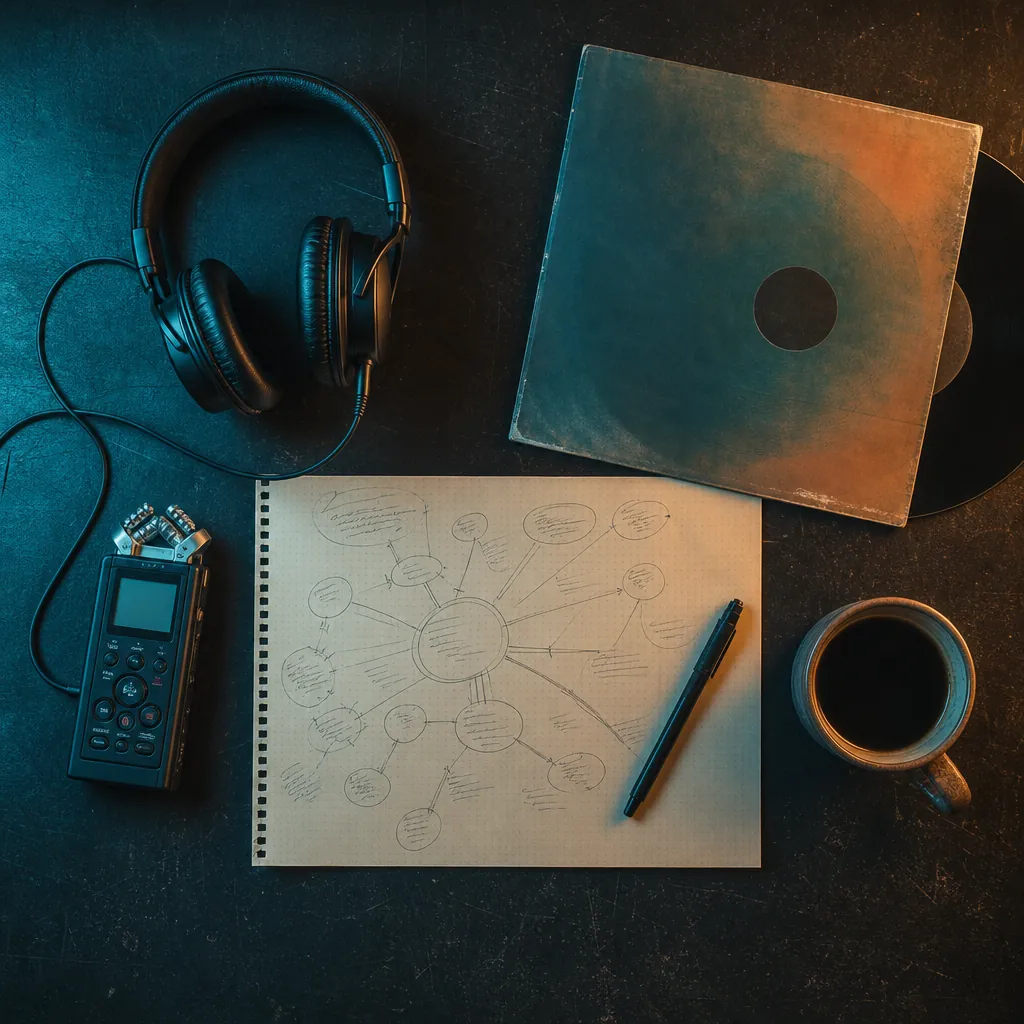
A brief research sheet is enough: the project, a few details you heard, a possible opening, and two or three threads worth following. The Community Broadcasting Association of Australia recommends that music hosts prepare open-ended prompts and research the artist’s music and biography before the conversation. That preparation is not about showing off. It lets the guest feel that the conversation has somewhere real to go.
Give the conversation one clear center
The best hip-hop interviews do not try to cover an entire career in 15 minutes. Pick the central reason you are speaking. It might be a new song, a full project, a performance, a creative turning point, a hometown story, or a new move the artist is making. That center gives the listener a way in and gives you a place to return if the conversation opens too many lanes at once.
Build a small map, not a script. Start with one question that helps the artist land. Move into the music. Leave room for a question about the larger story or a turning point. Save time for a clean close. Prepare more prompts than you expect to use, but do not mistake a long list for depth. A memorable answer can deserve three follow-ups, while five rushed questions can leave listeners with nothing to hold on to.
Ask questions that invite a scene
Broad prompts often produce broad answers. “Tell us about the album” can send a guest into a practiced answer because it asks them to cover everything at once. A more useful question points to a moment: “What was happening when that first verse found its shape?” “Which decision changed the direction of this project?” “What did the room sound like before that beat became final?”
The question has enough shape for the artist to answer, but it does not tell them what the answer should be. Poynter’s interview guidance makes the same distinction: open questions make room for an account, while a closed question is better for confirming a precise fact. Use both, but know the job of each. Ask an open question when you want a story. Ask a direct question when listeners need a date, credit, title, or detail stated clearly.
Keep the setup short. A host does not need to explain every observation before asking about it. Name the detail, ask one thing, and give the artist space. That approach is especially useful with artists who have been moving quickly through press, performances, or release-week obligations. A direct, well-listened question is often more generous than a long introduction.
Listen for the answer with energy behind it
The follow-up is where a good hip-hop interview becomes its own conversation. Listen for an answer that carries feeling, surprise, tension, or a specific image. When an artist says a song nearly did not make the project, asks you to picture a particular session, or names a person who changed their approach, do not rush forward. Stay with that thread.
Try simple follow-ups: “What changed after that?” “Who made that call?” “Can you take listeners into that session?” “What felt different when you heard it back?” “What do people miss on the first listen?” They do not need to sound clever. They need to prove that you heard the answer and want to understand it better.
Leave a little silence, too. A pause can feel long to the host, especially on a live microphone, but it can give a guest space to add the part that was not rehearsed. Active listening is not a passive wait for the next question. It is how you notice the detail that makes the conversation worth replaying.

Respect the artist without making the interview soft
Respect does not mean every question has to be easy. It means you have a reason for asking and you ask in a way that gives the guest a fair chance to answer. Questions about a lyric, a difficult creative choice, an industry pressure, or a public moment can be valuable when they connect to the work and serve the listener’s understanding.
Conflict, rumors, family, health, legal matters, and private loss are different. They can make an interview feel immediate, but that does not make them the right shortcut. Ask whether the subject is central to the story, whether you can frame it accurately, and whether you would be comfortable with a brief answer or a boundary. The Society of Professional Journalists’ ethics guidance emphasizes accuracy and minimizing harm, both useful standards when a conversation reaches sensitive ground.
Do not confuse directness with pressure. A clear question can be asked calmly. If an artist redirects, acknowledge the answer and decide whether a respectful follow-up adds value. If it does not, move forward. Listeners can hear the difference between an honest conversation and a host trying to manufacture a moment.
Keep the listener in the room
Every listener does not arrive with the same context. A day-one fan may catch every reference, while someone hearing the artist for the first time needs enough information to follow the story. Briefly name the project, song, collaborator, city, or moment when it matters. Do not turn the conversation into a lecture, but do not leave people outside an inside reference either.
When an artist explains a production choice, ask what it changed in the feeling of the record. When they mention a collaborator, ask what that person brought out of the song. When they name a local scene, ask what it taught them. These clarifying questions help listeners hear the music differently without forcing the artist to over-explain their own world.
Let the artist’s language lead
Hip-hop has never needed a host to translate every part of the culture into safe, polished language. An artist may use a phrase, reference, or cadence that carries real meaning in their community. If you do not understand it, ask for the story behind it without pretending you already know. “What does that word mean in the way you use it?” is more useful than turning a real expression into a novelty for the audience.
That same care applies to names, places, producers, DJs, crews, and local rooms. Pronounce names correctly. Confirm a title before you go live. Do not flatten a city into scenery when it is part of an artist’s sound and lived experience. Small details build trust, and trust is what makes an artist willing to move beyond the polished answer.
It also helps to let an artist correct the frame. If they say a project is not a comeback, a diss track, or a genre label you used, listen to the correction. Ask how they would describe it instead. A host can still bring a perspective, but the conversation gets stronger when the artist has room to name their own work.
Close with purpose
A good close brings the conversation back to the next useful step. Ask what the artist wants people to sit with after hearing the project, what they are taking into the next chapter, or where listeners can experience the work in full. Then give the practical details cleanly. A release, a performance, or a project link is more useful when it arrives after listeners understand why it matters.
For hosts looking to sharpen their own format, the Journal’s music interview questions offer more prompts, while the rapper interview question guide gives a deeper question bank for conversations about lyrics, beats, and creative process. Use them as starting points, not a script. The artist in front of you should always shape the conversation.

Check the details before the interview ends
Before you wrap, confirm the names, project title, release date, collaborators, and next place listeners should go. A strong answer can lose its value if the finished conversation gets the basic details wrong. If a guest mentions a track, producer, city, or event you have not fully verified, make a note instead of guessing on the spot.
That last minute of care also gives the artist a fair chance to correct a detail that changed since the interview was booked. Releases move, show dates shift, and a project can take a new shape after the first announcement. Clear information protects the listener’s time and makes it easier for them to follow the music after the conversation ends.
Bring the conversation back to culture
Live Wirez Radio Show is built around hip-hop, R&B, artist discovery, and conversations that give independent voices room to be heard. Explore the interview archive, or listen live to hear what is moving through the station now.
Artists with a new release, a performance, or a story ready to share can review artist opportunities, explore radio promotion services, or contact Live Wirez Radio Show. The goal is not to make every interview sound alike. It is to prepare well enough to let the music, the artist, and the listener meet in a real conversation.
Frequently asked questions
What makes a hip-hop interview good?
A good hip-hop interview starts with real attention to the artist’s work, asks clear questions about specific choices, and listens closely enough to follow the answer instead of rushing to the next talking point.
How do you prepare for a hip-hop artist interview?
Listen to the current release in full, note lyrics, production choices, collaborators, and moments that stay with you, then learn enough of the artist’s recent context to ask a focused first question.
Should a hip-hop interview ask about conflict?
Only when it is central to the work and can be discussed with care, context, and a clear reason. An interview should not turn a guest’s personal life into a shortcut for attention.
How many questions should a hip-hop host prepare?
For a 15- to 20-minute conversation, prepare roughly 10 to 15 prompts and expect to use fewer. Strong answers deserve follow-ups, so leave room for the interview to move naturally.
Related posts
Interview guide
45 Rapper Interview Questions That Go Deeper
Use these 45 rapper interview questions to explore lyrics, beats, creative process, community, and the story behind a release.
Read the guide →
Interview guide
48 Music Interview Questions for Artists, Musicians & Bands
Use these 48 music interview questions for artists, musicians, singers, rappers, and bands, with prompts that lead to better stories.
Read the guide →