Interview guide
50 Questions to Ask a Musician That Start a Real Conversation
A practical question bank for interviews that gets past the bio and into the music, process, and story.
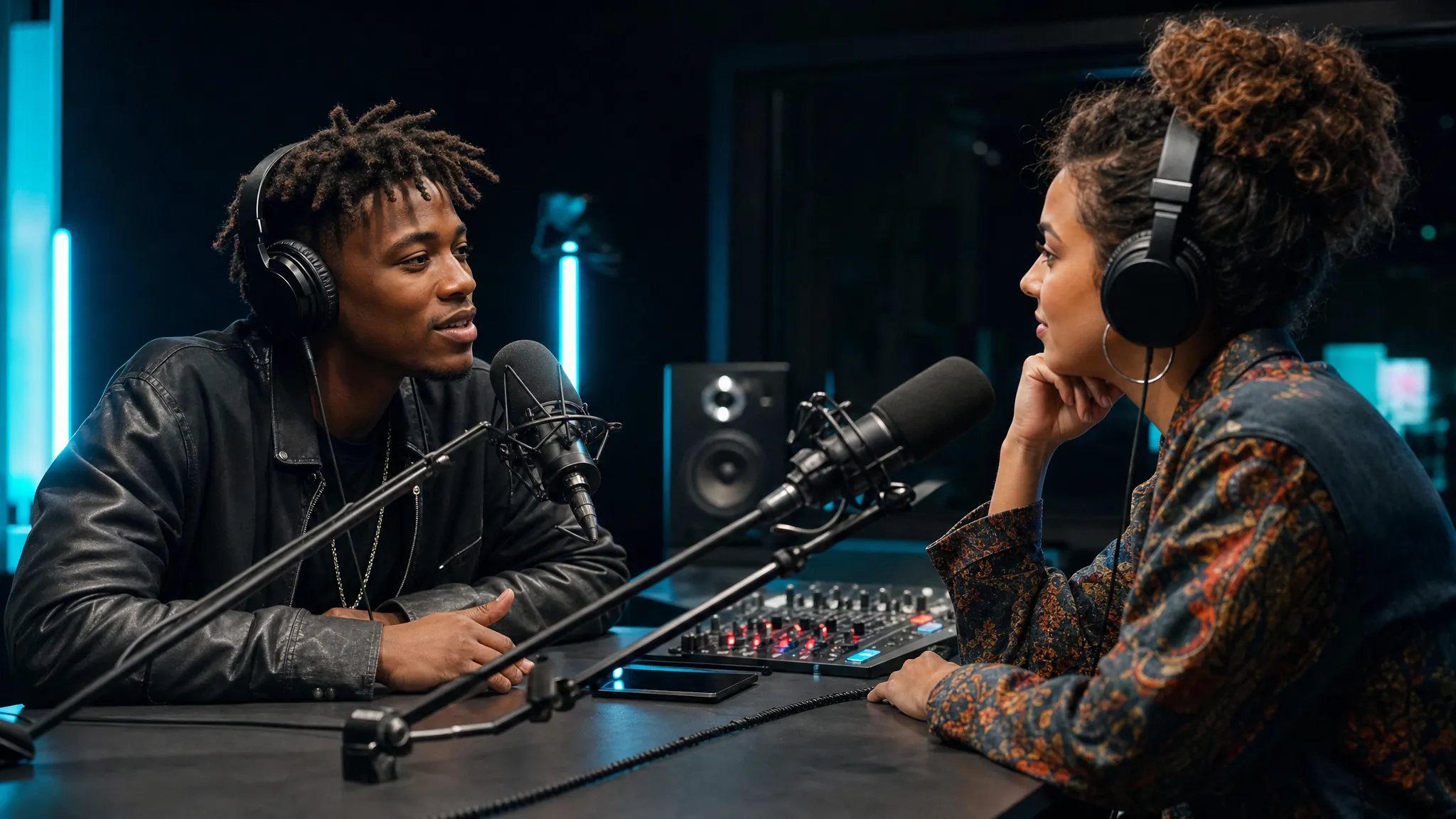
The best questions to ask a musician do more than fill dead air. They give an artist room to explain the choices, memories, and risks behind the music. Whether you host a radio show, make a podcast, write about music, or are preparing for a quick on-air conversation, a thoughtful question list helps you get past the bio and into the real story.
Use these questions as a map, not a script. Pick the prompts that fit the artist and their latest work, then stay present enough to follow the answer that has the most energy behind it. That is usually where the conversation becomes worth hearing.
Prepare for the musician, not just the release
Before you write a question, spend time with the work. Listen to the current release from beginning to end. Read the track list and credits. Watch a recent performance. Look for three details you honestly want to understand: a lyric, a sound choice, a collaboration, a hometown reference, or a change from the artist's earlier music.
That preparation gives you a way beyond the broad questions every musician has heard. Instead of asking what inspired the album, you can ask what changed after a particular song found its sound. Instead of asking about the artist's background, you can ask what part of their city still makes its way into the music. Specific questions are easier to answer with a real story.
Make a short question map with a beginning, the current work, the process, and what comes next. Keep a few backup prompts, but do not bring a page so crowded that you end up reading from it. Good interviews need structure. They also need enough space for a surprise.
Questions to ask a musician about the beginning
Origin questions work best when they ask for a moment rather than a full timeline. A particular memory is easier for listeners to picture, and it often tells them more than a long biography.
- What first made music feel like your lane?
- Who heard your sound before anyone else did?
- What did your earliest music setup look like?
- What part of your hometown still shows up in your work?
- What was the first song that felt fully honest?
- Which artist taught you something without ever meeting you?
- What did you have to unlearn as you found your own voice?
- What is one early record you still stand behind?
- Who gave you useful honesty when you were starting out?
- When did you stop copying your influences and start trusting your instincts?
Listen carefully after an answer about the beginning. It may lead to a useful follow-up about a person, a neighborhood, a family member, or the first room where the artist felt welcome. Those details help a listener understand the person behind the release without forcing the interview into a résumé.
Questions about the music and creative process
Craft questions let musicians share how the work came together without requiring a technical lecture. They are strongest when you can tie them to a specific song, lyric, sound, beat, melody, or collaboration.
- Where did the first spark for this project come from?
- What was the first track that told you the project had a direction?
- How do you know when a song is finished?
- Which lyric, beat, melody, or vocal moment took the longest to get right?
- What sound on the record might listeners miss on the first play?
- What did you protect most while making this release?
- What almost did not make the final version?
- How do you decide what belongs on a project and what stays in the vault?
- What did a collaborator bring out of you that you could not reach alone?
- What did this project teach you about your own habits?
When an artist gives a brief answer, narrow the focus instead of changing subjects. If they say the song started at home, ask what was happening that night. If they mention a producer, ask what that person heard first. If they say a track took months, ask what kept them from letting it go. Small follow-ups often uncover the detail a listener remembers.
Questions that open up the current release
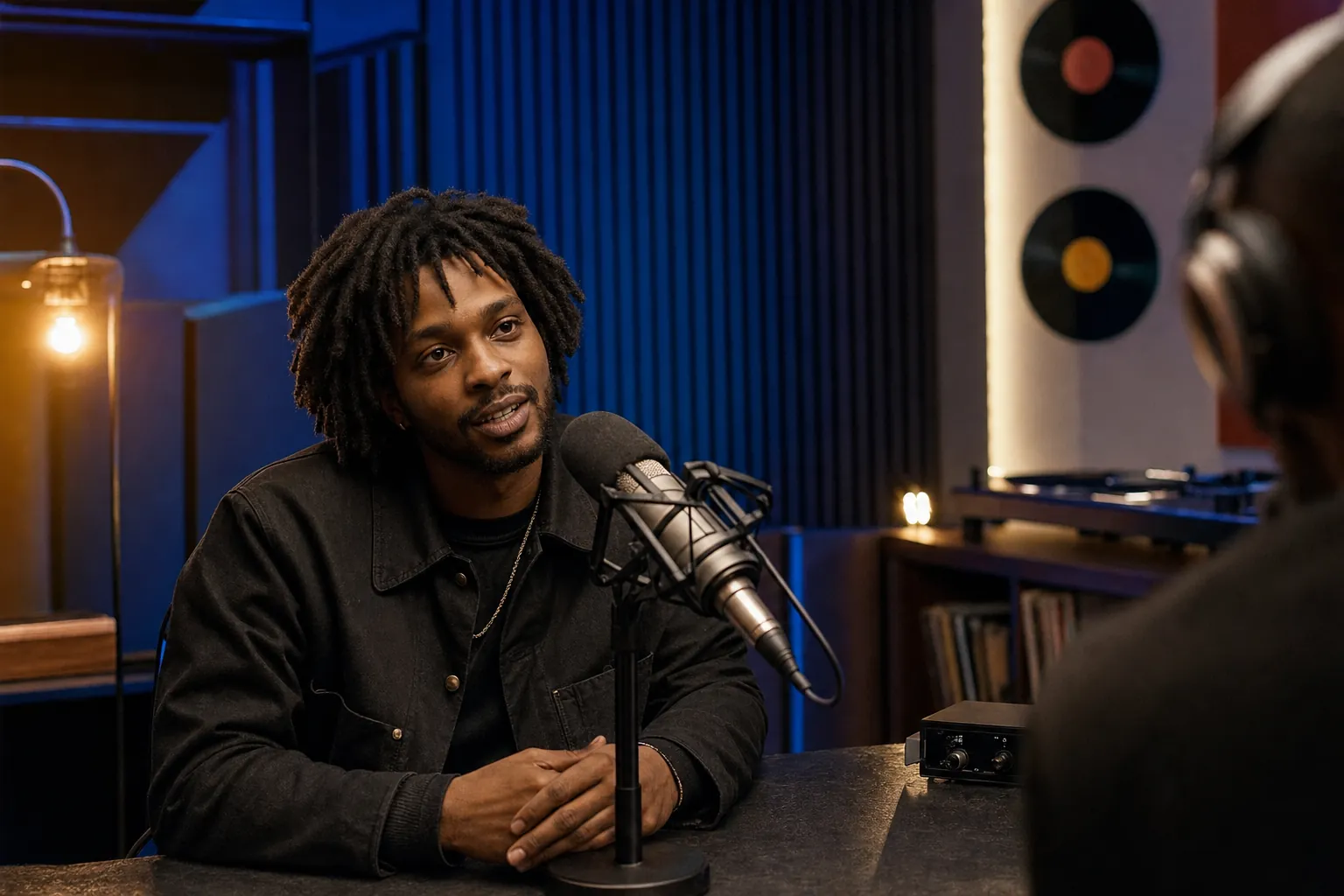
A new song or project is often the reason for the interview, but the conversation should not turn into a commercial. Ask about the work in a way that lets the musician explain why it matters and what listeners are hearing beneath the surface.
- What does this song say that you could not say another way?
- Where were you emotionally when you started writing it?
- What changed most between the first demo and the final version?
- Which moment on the project feels most personal to you?
- What conversation do you hope this release starts?
- Which track would you play first for someone new to your music?
- What did taking a creative risk teach you on this project?
- What did you leave out because it did not belong in this chapter?
- What do you hope people notice after a second listen?
- When the last track ends, what do you hope stays with the listener?
Questions about the release should make a listener want to return to the music with fresh ears. A musician may be able to explain why a hook changed, what a collaborator added, or why a song had to be stripped back. That context gives the work a life beyond the release announcement.
Questions about identity, community, and culture
Music comes from people and places. These prompts connect the musician to their community and perspective while leaving them room to decide what matters most. They work especially well after you have spent time talking about the current project.
- What part of your community keeps you grounded?
- Who is making work right now that has your attention?
- What does being independent mean to you at this stage?
- What do you hope people understand about your city or scene?
- What kind of room do you want your music to create for people?
- What is something people often miss when they first hear your music?
- How has your relationship with your audience changed?
- What has another artist taught you about staying in the work?
- What are you more protective of now than when you started?
- What are you still curious enough to be a student of?
Some subjects deserve extra care. Personal loss, health, money, family, conflict, legal issues, and public rumors may be part of someone's story, but they are not automatically the most useful part of an interview. The Society of Professional Journalists' Code of Ethics offers a clear standard: seek the truth, avoid unnecessary harm, and let people respond with dignity. Ask direct questions when they matter, but do not turn a guest into a headline.
Questions that work on live radio
Live radio moves quickly. The best questions are easy to understand on first hearing, give the musician room to paint a picture, and make sense to a listener who has never heard of them. Skip the long preamble and keep one clear thought in the air at a time.
- What was the exact moment you knew this song had to come out?
- If someone hears you for the first time today, what should they listen for?
- What would surprise people about how this record came together?
- What is one line or sound from the project that still hits you every time?
- Which song changed most once you played it for other people?
- What have you learned about yourself since the last time you released music?
- What conversation are you hoping to have with fans after this release?
- What is the first thing you want listeners to know before they press play?
- What should people keep an eye on after they hear this interview?
- Where should listeners go to stay connected with your music?
For a 10-minute segment, start with one question about the release, spend time on one story about the creative process, ask one follow-up, and save room for a closing message to listeners. For a longer conversation, give each area more room: the beginning, the music, the community around it, and the next chapter.
It helps to decide the first question before the guest arrives, then earn the more personal questions as the conversation develops. A musician who has just explained how a beat came together may be ready to talk about the risk behind the record. A guest who is still finding their rhythm may need an easy question about the song before you move into anything deeper. The running order should support the person in the room, not force every interview into the same shape.
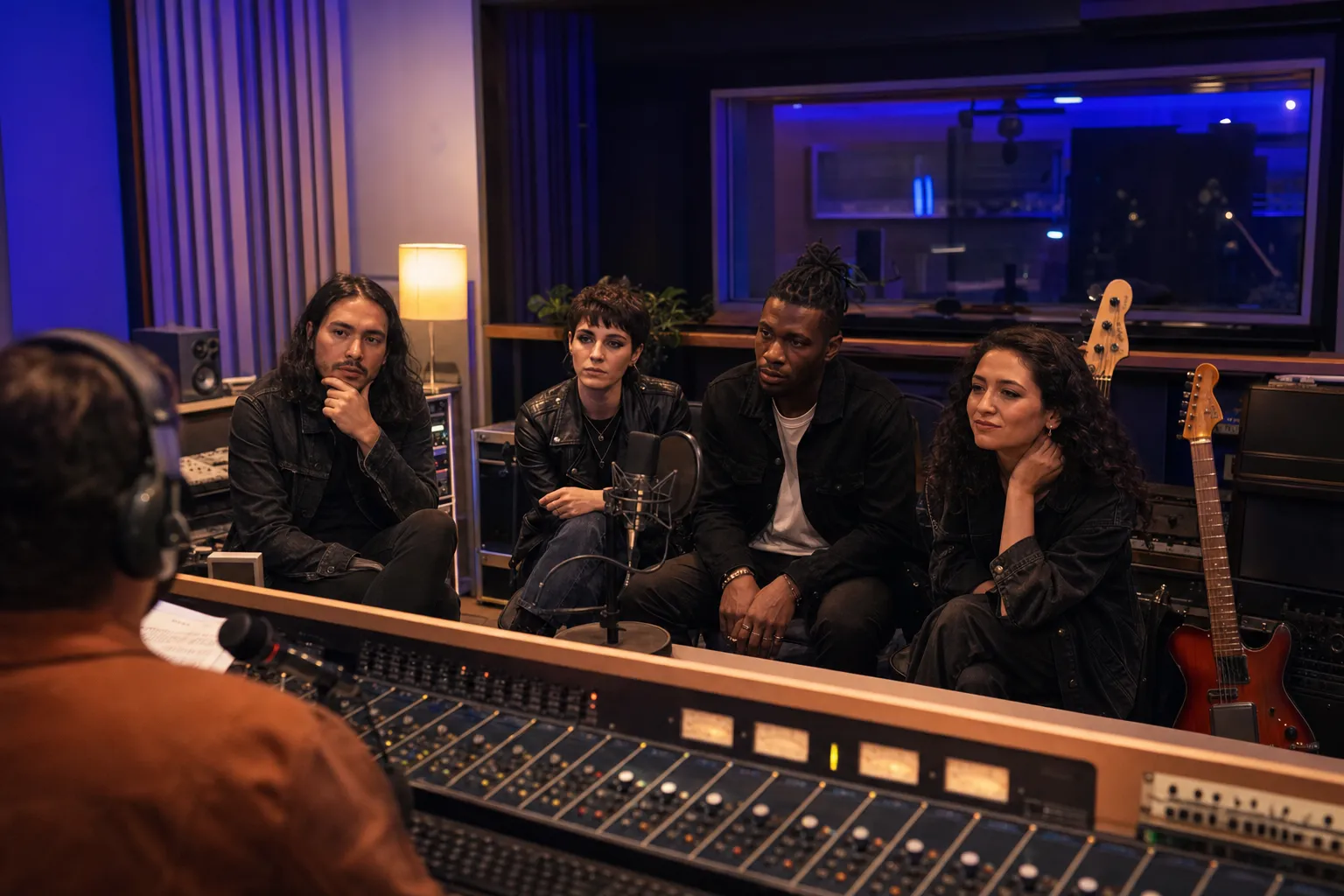
Let the answer shape the next question
The prepared prompt gets the conversation started. The follow-up is what makes it memorable. When an answer has energy behind it, slow down before you move on. Ask for the room, the decision, or what changed next. “Can you take me back to that moment?” and “What did that feel like in the room?” are simple questions that invite an artist to add texture in their own words.
Poynter's guide to interviewing basics makes the case for open questions and patient listening. Those habits matter on air, too. You do not need to fill every pause. Sometimes the best next move is to let the musician think, then ask one precise question that follows what they just gave you.
Do not use a follow-up as a way to trap a guest. The goal is clarity, not a gotcha moment. If an artist offers a difficult memory, decide whether more detail will serve the story or simply make the room uncomfortable. A respectful pause, a useful question, and permission to move on are all better than forcing an answer that was never there.
Before you close, give the artist a clean final moment. They may want listeners to hear a project, attend a show, watch a visual, or follow the next release. A clear close respects the guest's time and gives the audience a simple way to stay with the music after the interview ends.
Bring the music into the conversation
Live Wirez Radio Show is built for interviews that give independent voices room to say more than a release date. Hosts and writers can explore the Live Wirez interview archive for that conversation-first approach, while listeners can hear the station live for music and voices in rotation.
Artists with a new single, project, visual, or live moment can explore artist opportunities, review radio promotion services, or see how independent artist promotion can help bring the release and its story to a wider audience. Come ready with the work, the moment behind it, and a reason listeners should lean in.
Frequently asked questions
What are good questions to ask a musician?
Good questions to ask a musician are specific, open-ended, and connected to the work in front of you. Ask about a lyric, a sound, a decision, a collaborator, or a moment that changed the project, then give the answer room to lead to the next question.
How do you prepare to interview a musician?
Listen to the current release in full, read the track list and credits, and note a few details that you honestly want to understand. Prepare a short question map, not a script, so you can follow a strong answer without losing the shape of the conversation.
How many questions should I ask a musician?
For a 15- to 20-minute interview, prepare 10 to 15 questions and expect to use fewer. A few well-chosen prompts plus attentive follow-ups will usually lead to a stronger conversation than trying to get through a long list.
Should I send questions to a musician before an interview?
A short topic outline can help a musician prepare, particularly for a live or time-limited appearance. Keep the outline broad, agree on any sensitive subjects in advance, and save room for natural follow-up questions during the interview.
Related posts
Interview guide
50 Artist Interview Questions That Find the Real Story
Practical prompts for interviewing musicians about the work, the moment, and the stories listeners will remember.
Read the guide →Interview guide
40 Band Interview Questions That Start Real Conversations
Thoughtful prompts for interviewing bands about their sound, chemistry, creative process, and the story behind the music.
Read the guide →
Interview guide
45 Rapper Interview Questions That Go Beyond the Basics
A sharper set of prompts for conversations about bars, beats, community, craft, and the work behind the release.
Read the guide →