Interview guide
45 DJ Interview Questions That Get Real Answers
Thoughtful DJ interview questions about reading the room, building a set, music discovery, community, and the story behind the sound.
A good DJ interview helps people hear a set differently. It gets past a quick list of favourite tracks and into the choices that shape a room: the record that opens a night, the transition that changes the energy, the local sound worth protecting, or the feeling a DJ wants people to carry home.
Use these DJ interview questions for radio, podcasts, event coverage, or a conversation with a selector whose work you genuinely want to understand. They are made for interviewing a DJ about the craft, not for hiring a wedding vendor. Pick the prompts that fit the person in front of you, then let a strong answer change the path of the conversation.
Listen for the story before you press record
Preparation is what keeps a DJ interview from becoming a generic biography. Listen to a recent mix, radio show, club recording, or playlist from start to finish. Notice one transition, one unexpected artist, and one point where the energy shifts. Read enough about the current show, release, or event to understand the setting. Then bring a short question map instead of a script.
Open questions give a guest room to describe the work in their own language. Poynter's guide to interview questions makes the same useful distinction: broad questions invite explanation, while closed questions are best saved for a fact that needs a clear answer. In practice, that means asking what a DJ noticed in a room, not whether the crowd was good.

Questions about the beginning
Start with a moment, not a full timeline. A first set, a family record collection, or a local party gives listeners a scene they can picture and gives the DJ a natural place to begin.
- What was the first moment that made DJing feel possible for you?
- What did your earliest setup look like, and what did it teach you?
- Who trusted you with your first real set?
- What record, mix, or radio show changed how you listened to music?
- What part of your city or community shaped your ear?
- What did you get wrong in your early sets that made you better later?
- When did you first feel a room respond to a choice you made?
- What do people misunderstand about the path into DJing?
- Who gave you useful honesty when you were learning?
These questions work because they invite a memory instead of a press line. If a DJ mentions a local room, a mentor, or a sound system, stay there for one follow-up. That detail often says more about the music than a long list of influences.
Questions about building a set
A DJ's set is not just a sequence of songs. It is a series of decisions made for a particular room and moment. Ask about those decisions, and listeners get a clearer sense of the skill behind what can look effortless.
- How do you decide what the first record needs to do?
- What tells you a set is ready to move in a different direction?
- How do you read a room without chasing every reaction?
- What makes two records belong next to each other?
- How do you recover when a choice does not land the way you expected?
- What kind of transition still makes you proud when you hear it back?
- When do you trust a prepared idea, and when do you abandon it?
- What do you want a listener to feel halfway through one of your sets?
- How do you create momentum without making every moment louder?
Try not to ask a DJ to explain an entire process in one breath. Choose a real point in a recent set, name the song or feeling you noticed, and ask what happened next. Specific questions are easier to answer honestly, and they give the audience a way to replay the music with new attention.
Questions about music discovery and taste
Many listeners want to know where a DJ finds music, but the better conversation is about discernment. A good selector does not only find a track. They hear what it might do in a particular sequence, on a particular system, for particular people.
- Where do you still find music that surprises you?
- What makes you stop and listen to a new record more than once?
- How do you decide whether a new song belongs in your world?
- What is a track you loved before the room caught up with it?
- How do you balance familiar records with music people have not heard yet?
- What do you listen for beyond the obvious hook?
- Which artists or scenes deserve more attention right now?
- What does a great opening record have in common with a great closing record?
- How has your taste changed since you started?
A question about discovery is also a chance to give credit. If a DJ names an artist, producer, promoter, record store, radio program, or local scene, say the name clearly and let the guest explain the connection. It turns the interview into a useful map for listeners, not just a portrait of one person.

Ask about tools only when they reveal the craft
Gear can be part of a DJ's story, but it rarely needs to take over the interview. A long inventory of controllers, software, turntables, speakers, or plug-ins can leave a listener behind. A better approach is to connect the tool to the decision it made possible. Ask what the DJ can hear, do, or communicate with that setup that would be harder another way.
That framing also works for a new DJ who is still learning. It keeps the attention on practice, listening, preparation, and adaptability rather than on buying the exact equipment someone else owns. The useful answer is not a shopping list. It is a small lesson about how the person works.
- What does your current setup let you do that matters to your style?
- What is one simple tool you learned to use deeply?
- How do you prepare your music before a set without overplanning it?
- What do you check first when you walk into an unfamiliar booth or studio?
- What backup habit has saved you more than once?
- What part of your preparation would surprise somebody who only sees the finished set?
Questions about the room, the crowd, and community
DJing is social work as much as musical work. These prompts help a guest speak about the people, places, and responsibilities around the set without reducing the conversation to numbers or hype.
- What makes a room feel safe enough for people to let go?
- What does respect for an audience look like in practice?
- How do you make space for people who may be hearing this sound for the first time?
- What has a local crowd taught you that no playlist could teach?
- What do you protect when you are representing your community?
- How do you respond when someone requests a song that does not fit the moment?
- What is one night that reminded you why you do this?
- Who helps make the experience work behind the scenes?
- What do you want young DJs to understand about building a lasting presence?
Respect should shape the interview, too. The Society of Professional Journalists' Code of Ethics calls for accuracy, care, and dignity. Do not press for a private story the DJ has not offered, turn conflict into entertainment, or demand an impromptu performance. Ask about the work, give a guest room to set a boundary, and keep the conversation moving if they do.
Follow-ups that find the real answer
The first question opens a door. The follow-up is where a DJ can explain a decision listeners would otherwise miss. When an answer has energy behind it, slow down and ask for the scene, the choice, or what changed afterward.
- Can you take us into that room for a second?
- What did you notice that made you change course?
- What did that record unlock for the rest of the set?
- Who was part of that moment with you?
- What did you learn after it did not go as planned?
- Why did that choice matter to you?
- What should a first-time listener notice when they hear it?
- How did that experience change the way you work now?
- What do you hope happens next for that sound or scene?
Keep the follow-up focused on one idea. Questions with too many parts make it easy for a guest to answer only the safest part. One clear question, followed by a real pause, gives the conversation a chance to become less rehearsed and more memorable.
Questions to reframe before you ask them
A few familiar questions can make a guest feel like they are being asked to repeat a biography. “Who are your influences?” becomes more useful when you ask which artist changed how they build a set. “What is your favourite song?” becomes more useful when you ask what record they can play in different rooms and still trust. The change is small, but it moves the answer from a list to a story.
Be especially careful with questions about money, conflict, health, family, or a difficult period in someone's life. If the topic matters to the work and the guest has already raised it, explain why you are asking and leave room for them to decline. Do not use a surprise question to manufacture a tense moment. An interview built on attention and consent gives the DJ more reason to be generous with the real craft behind the music.
A 15-minute DJ interview map
For a short radio or podcast segment, start with one warm question about the current show, set, or release. Spend the middle on two pieces of the craft: a recent transition, a music discovery, a crowd-reading decision, or a story behind a specific track. Use one follow-up when an answer opens up. Save the final minute for a clear invitation, such as where listeners can hear the next set, support a local event, or find the artists the DJ wants to put on their radar.
Bring 10 to 15 prompts, but expect to use fewer. More questions are not better if the guest is telling a story worth staying with. A short, complete answer about one brave choice in a set can stay with a listener longer than five rushed topics.
Keep the conversation connected to the music
Live Wirez Radio Show is built around music, culture, and independent voices with something real to say. Use the station's interview archive for more conversation-first inspiration, or listen live to hear the music and voices in rotation.
Artists and DJs who have a release, event, story, or next move ready to share can explore artist opportunities, see the station's radio promotion services, or learn about independent artist promotion. Bring one detail listeners can hold onto, then let the music do the rest.
Frequently asked questions
What are good questions to ask a DJ in an interview?
Good DJ interview questions start with a specific set, transition, song choice, or room the DJ has shaped. They invite the DJ to explain how they read people, find new music, build momentum, and make choices that listeners can hear.
How do you prepare to interview a DJ?
Listen to a recent mix or radio set, note a few transitions or artists that stand out, and learn where the DJ is playing or broadcasting now. Bring a short question map, then leave room for the stories that come from the details you noticed.
Should you ask a DJ about equipment?
Ask about equipment when it reveals a creative decision or a practical lesson. A question about why a particular setup helps a DJ build a certain feel is more interesting than asking for a long inventory of gear.
How many questions do you need for a DJ interview?
For a 15- to 20-minute conversation, prepare 10 to 15 prompts and expect to use fewer. One good story about a turning point, a crowd, or a song can earn several useful follow-up questions.
Related posts
Interview guide
50 Radio Interview Questions That Keep Listeners Listening
Use these radio interview questions to prepare a natural, listener-first conversation with an artist, creator, or community guest.
Read the guide →
Interview guide
45 Music Producer Interview Questions About the Track
Thoughtful music producer interview questions about beats, arrangement, artist collaboration, sound, and the choices behind a release.
Read the guide →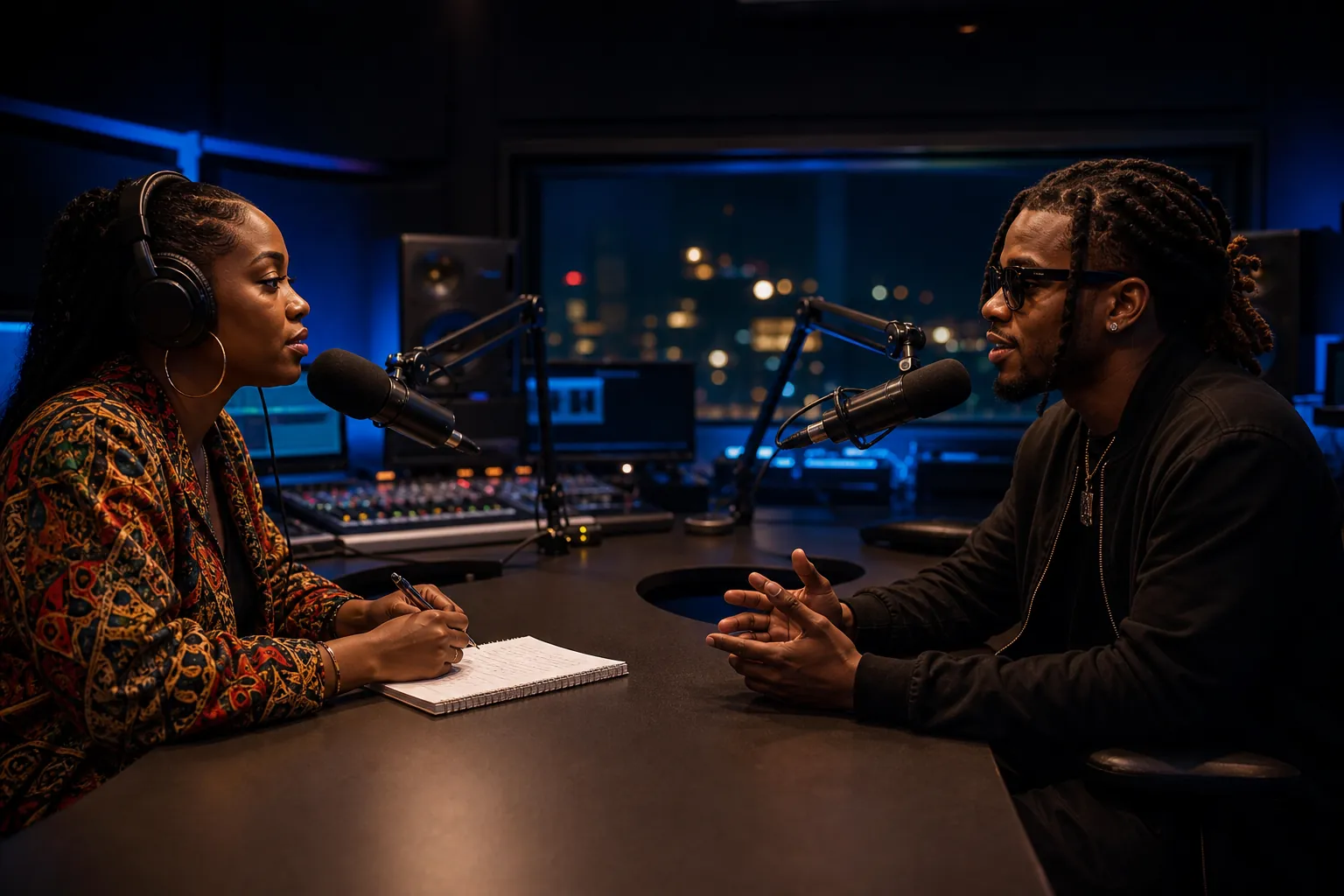
Interview guide
48 Music Interview Questions to Ask Artists
Use these 48 music interview questions to prepare thoughtful conversations with singers, rappers, bands, and independent artists.
Read the guide →