Interview guide
How to Interview a Musician and Find the Real Story
A practical guide to preparing, listening, and following the moments that make a musician interview worth hearing.
Interviewing a musician is not about proving that you did the most homework. It is about doing enough homework to recognize a story when it arrives. A good conversation lets listeners hear the choices inside the music, the people around it, and the moment the artist is living through. It also gives the musician room to sound like a person instead of a press release.
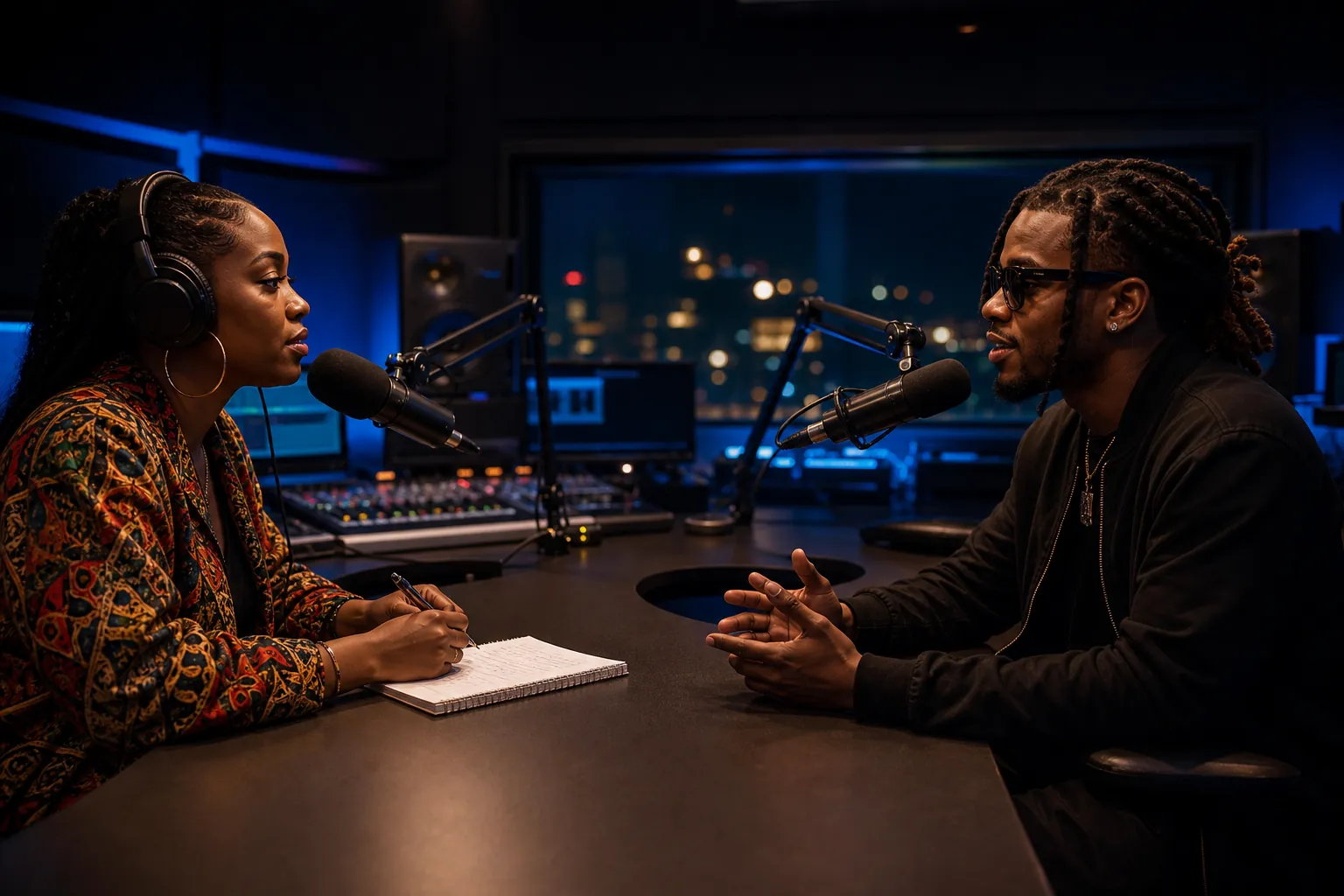
Whether you are hosting radio, recording a podcast, writing a feature, or speaking with an artist before a set, the same basic work applies. Prepare with care, make a clear plan, ask one thing at a time, and listen hard enough to let a useful answer change your next question. This guide shows how to interview a musician in a way that feels prepared without becoming rigid.
Start with the purpose, not the question list
Before you write a single question, decide what the conversation needs to help people understand. Is the musician introducing a new song, reflecting on an album, preparing for a show, or talking about the path that brought them here? That simple choice keeps the interview from trying to cover a whole career in 15 minutes.
Then think about the listener. A longtime fan may want to hear a detail about the new work. A first-time listener needs a clean way into the artist’s world. A useful interview usually serves both by beginning with the present moment and widening out when the musician gives you something worth following.
Set one main goal and two supporting lanes. For example, a release interview might center on the new record, with room for the creative process and the artist’s next move. That structure gives you a way back when the conversation wanders, but it does not turn the exchange into a script.
Do enough research to ask a specific first question
Listen to the current release from beginning to end. Do not stop at the lead single if the artist has put out a project. Notice a lyric, an arrangement change, a beat switch, a vocal choice, a collaboration, or a title that gives you an honest question. Read the credits when they are available and watch or hear one recent performance. You are looking for details that make the conversation personal to this artist.
Also spend a few minutes with earlier interviews. The point is not to imitate someone else’s questions. It is to avoid asking the same biography prompt the artist has answered all week. If you hear a story they have already told often, look for the decision beneath it: what did it change, what did they learn, or how does it show up in the new music?
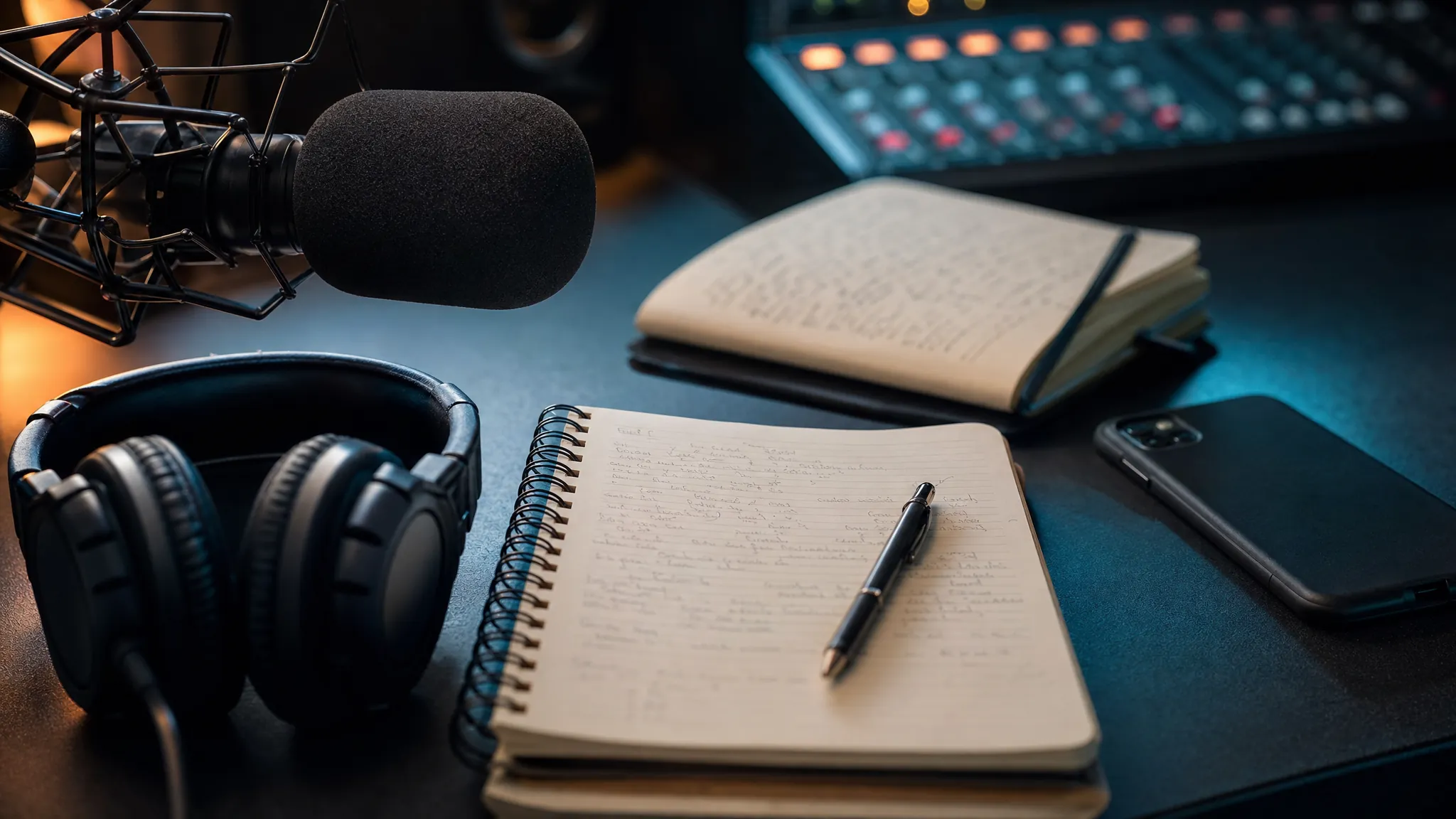
Keep your research notes short. Write the artist’s name, project title, key collaborators, two things you noticed, and a few possible questions. A page full of copied facts can make you stare down at the desk. A small set of useful notes keeps your attention on the person across from you.
Build a question map instead of a script
Organize your questions in clusters rather than a single long list. Start with a warm opening, move into the work, leave room for a story or turning point, then close with what listeners should carry forward. Each cluster gives you options. You might use one question from a section or five, depending on the answers.
A simple 20-minute map can look like this: one opening question about what is happening now, two questions about the music, two possible follow-ups, one question about the bigger story, and one closing invitation. Bring more prompts than you will use, but expect to leave some behind. The best conversations are guided by the answer in the room, not by the number of questions crossed off.
Use open questions when you want a story. “What changed between the first demo and the version people hear now?” gives a musician a place to begin. Use closed questions only for a fact that needs a clean answer, such as a release date or collaborator’s name. Poynter’s guidance on using questions to guide an interview makes the same useful distinction: broad prompts open a conversation, while precise questions confirm the details.
Open with a question that helps the musician land
The first question should be easy to understand and connected to why you are speaking today. Avoid a long introduction that does all the talking for the guest. A brief welcome, the artist’s name, and one question are usually enough.
Try an opening that invites a scene: “What was happening when this song first started to take shape?” Or point to a choice you noticed: “The record gets quieter before the last chorus. What did you want that moment to do?” A specific opening shows that you listened and gives the musician something more interesting than “Tell us about yourself.”
If the guest is new to interviews, tell them what the conversation will feel like before recording starts. Confirm the length, the main topic, and how you will handle the close. A person who understands the shape of the moment can relax into it. That is not about making the interview soft. It is about making room for a more useful answer.
Ask one clear thing at a time
Multi-part questions create an easy escape route. When you ask about the songwriting, production, collaborators, and meaning of a song all at once, most guests will answer the easiest part. Break the idea into smaller questions. Start with the one you care about most, then let the answer earn the next one.
Specific language helps. Instead of asking, “What inspired the project?” ask, “What was the first image, sound, or feeling that gave this project a direction?” Instead of “How was the studio process?” ask, “What was the moment in the studio when you knew the song was becoming itself?” The question has enough shape to be answerable, while the musician still gets to choose the story.
Be careful with personal subjects. Family, health, money, grief, legal trouble, conflict, and public controversy may matter to the work, but they are not automatically yours to pursue. The Society of Professional Journalists’ ethical guidance calls for accuracy, care, and minimizing harm. If a topic needs to be discussed, have a clear reason, ask respectfully, and let the guest set a boundary.
Listen for the detail that deserves a follow-up
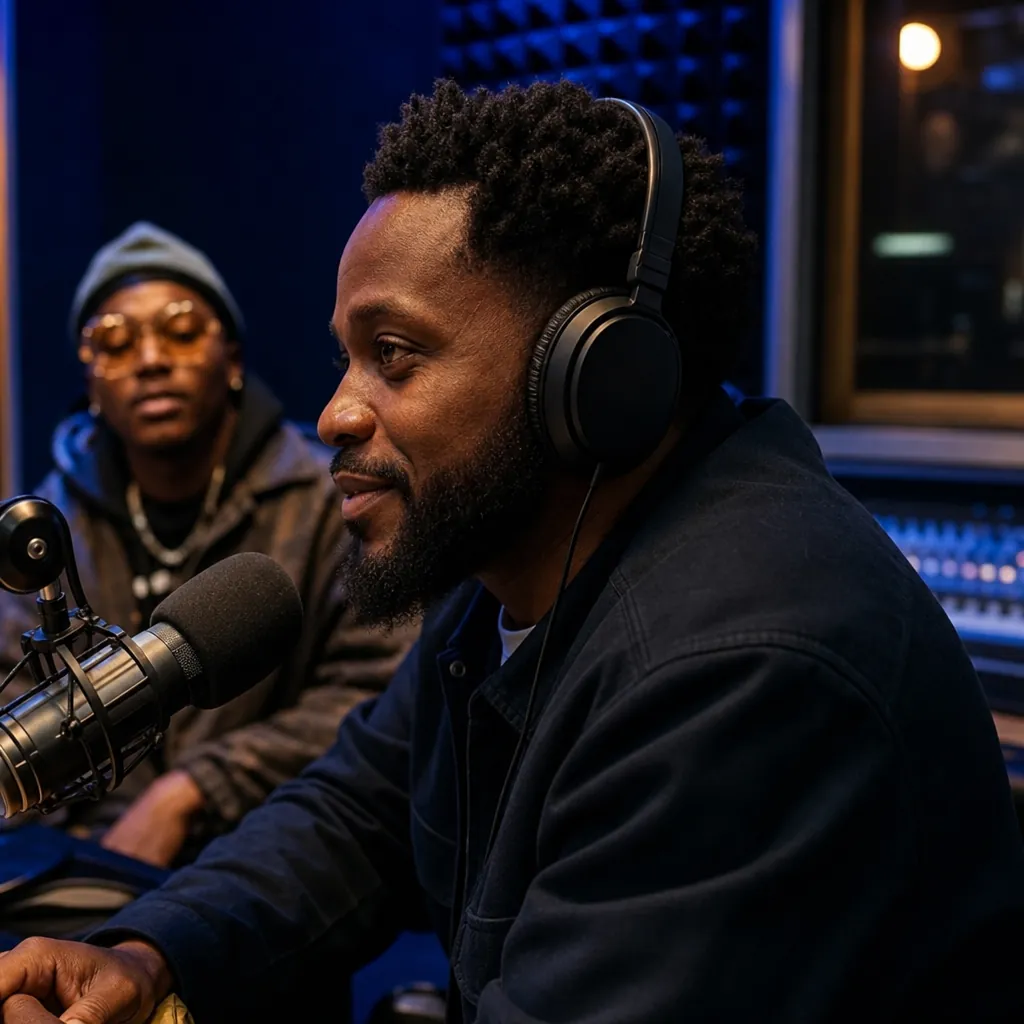
The follow-up is where an interview stops being a questionnaire. When a musician names a person, a place, a hard decision, an unexpected sound, or a moment that changed the work, slow down. Ask what happened next, who was there, or what they noticed at the time. You do not need a clever follow-up. You need to be present enough to recognize the thread.
Good follow-ups are often short: “Can you take me into that room?” “What did that change?” “What did you hear when it clicked?” “Why did that feel risky?” “What do listeners miss on the first pass?” Each one stays close to the answer instead of jumping to a different topic.
Pause after a response. Silence can feel longer to the person asking the question than to the person answering it. A small pause often gives the guest a chance to add the part that matters most. If they have finished, you can move on. If they are thinking, you have made room for something less rehearsed.
Keep the listener in the room
Radio and podcast listeners cannot see the expression on a musician’s face or the notes on your desk. Give them enough context to follow the conversation. Briefly name the song, project, show, city, or collaborator when it becomes important. Avoid long setups, insider language, and questions that only make sense if someone has read the artist’s entire history.
When a guest says something technical, do not pretend every listener already knows it. Ask them to describe what the choice changed in the music. When they mention a collaborator, ask what that person brought to the track. Those small clarifications help new listeners stay with you without flattening the conversation for people who already know the work.
For a live segment, watch the clock but do not rush a real answer simply because the next prompt is waiting. If time is tight, choose the next useful lane, not the next item on the list. One complete story can do more for an artist and a listener than five answers cut off in the middle.
End with a useful, honest next step
A good close should not feel bolted on. Ask what the musician wants people to pay attention to next, where they hope listeners will spend time with the work, or what they are taking into the next chapter. Then say the practical details clearly: the release, a show, a project, or a place to follow the artist.
Thank the guest and keep the outro in proportion to the conversation. You do not need to repeat every achievement or force a big final lesson. If the interview has found a real story, the best close is often the one that lets that story land.
Review the conversation while it is still fresh
As soon as the recording or segment is over, make a few notes. Mark the answer that changed the conversation, the name or title you need to verify, and any detail that may help you introduce the finished piece. This is also the best time to notice what you missed. You may hear a theme in the playback that was not obvious in the moment, or realize that one answer deserves a short follow-up by email before you publish.
When you edit, protect the shape of the artist’s answer. Tighten repetition and remove detours that do not serve the listener, but do not cut so heavily that a thoughtful idea becomes a different claim. Check the spelling of names, song titles, places, and collaborators. If you quote a lyric, confirm it carefully. Small factual mistakes can pull focus from a strong conversation.
Choose a title and a short introduction that lead with the moment that has the most life, not the most generic description. A story about how a song found its final form will often draw people in better than a simple announcement. Then share the finished conversation in a way that gives the musician and their audience a clear path back to the full piece.
Bring the conversation back to the music
Live Wirez Radio Show is built around music, culture, and independent voices with something to say. Browse the interview archive for more conversation-first inspiration, or listen live to hear what is in rotation.
Artists who have a release, performance, or story ready to share can explore artist opportunities, see the station’s radio promotion services, or contact Live Wirez Radio Show. The point is not to make every interview sound the same. It is to prepare well enough that each musician has room to make the conversation their own.
Frequently asked questions
How long should a musician interview be?
A useful musician interview can be 10 minutes or an hour. Agree on the time before you begin, then plan fewer topics than you could cover so the guest has room to answer fully and you can follow a strong story.
What should I research before interviewing a musician?
Listen to the current release in full, read the available credits, watch or hear one recent performance, and note two or three details that honestly interest you. That preparation helps you ask about the work rather than repeat a biography.
Should I send questions to a musician before an interview?
A short topic outline can make a guest more comfortable, especially for a live or time-limited conversation. Share the broad themes and any sensitive subject in advance, then keep room for genuine follow-up questions during the interview.
How do I get better answers from a musician?
Ask one clear, open question at a time, pause after the answer, and use the detail with the most energy as your next starting point. A focused follow-up usually gets further than moving immediately to the next prepared question.
Related posts
Interview guide
48 Music Interview Questions for Artists, Musicians & Bands
Use these 48 music interview questions for artists, musicians, singers, rappers, and bands, with prompts that lead to better stories.
Read the guide →
Interview guide
50 Podcast Interview Questions That Find the Story
A practical question bank for podcast hosts who want natural conversations, better follow-ups, and memorable music guest interviews.
Read the guide →